Quick Answer: What Are Cutie Pie Synonyms?
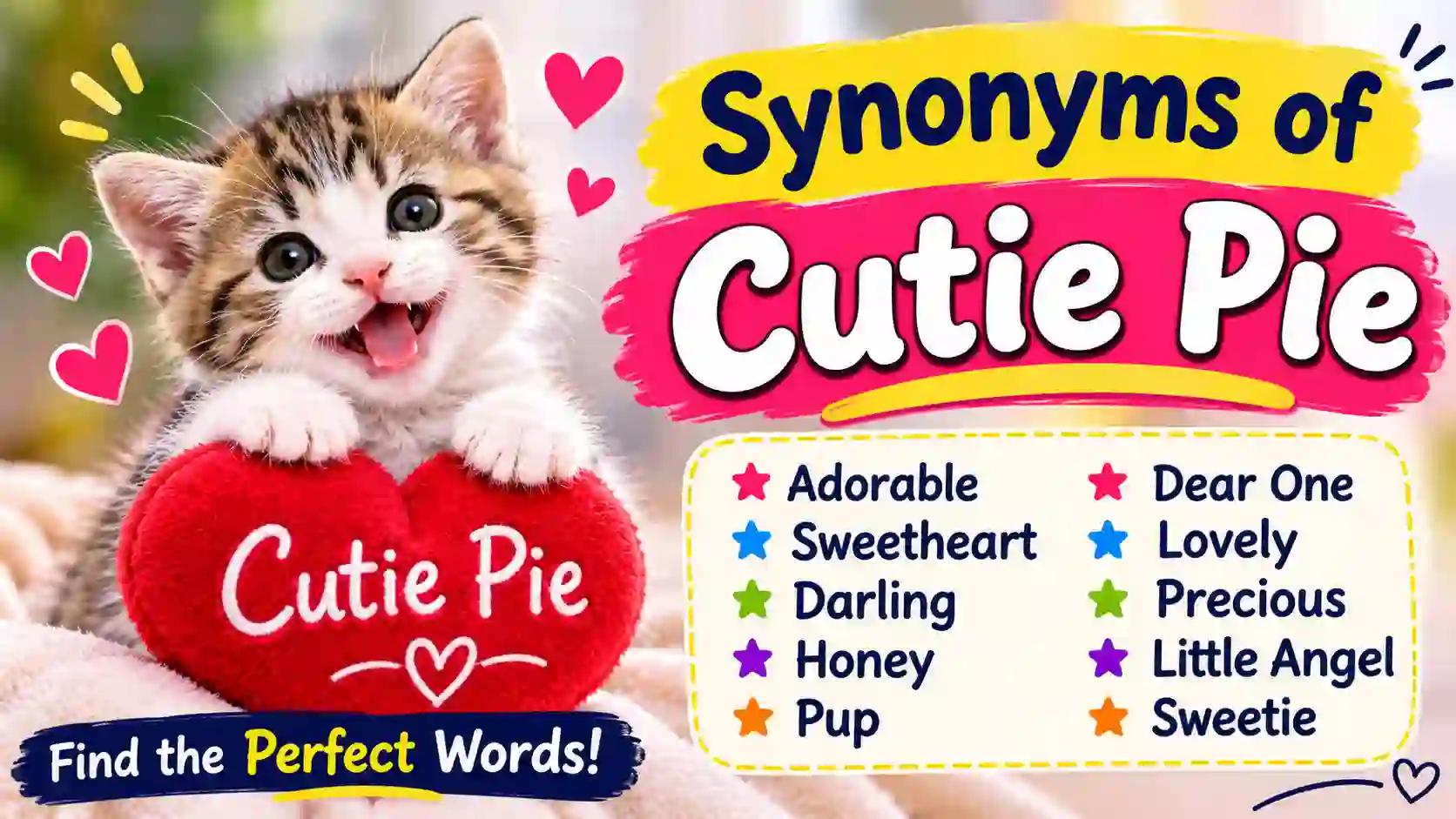
The best synonyms of cutie pie include sweetheart, sweetie, darling, cutie, honey, dear, and sweetie pie. These informal expressions describe someone who is lovable, attractive, charming, or special. Other alternatives, such as cupcake, sunshine, angel, and pumpkin, work as playful nicknames. Choose a word that matches your relationship and the feeling you want to express.
Have you ever wanted to call someone a cutie pie but needed another expression that sounded just as sweet? English has many affectionate words for describing someone you love, admire, or find adorable.
Cutie pie is an informal noun. It can describe a cute person or work as a loving nickname. People commonly use it with children, family members, close friends, romantic partners, and sometimes pets.
However, not every alternative means exactly the same thing. Sweetheart expresses affection, adorable describes cuteness, and gorgeous focuses on physical beauty. Understanding these differences helps you choose the right expression.
This guide explores 30 synonyms of cutie pie with meanings, original examples, common combinations, and usage advice. You will also learn which words work best in romantic messages, friendly conversations, and everyday English.
Pronunciation
- Word: Cutie pie
- IPA: /ˈkjuː.ti paɪ/
- Pronunciation: KYOO-tee pie
- Syllables: Three
- Word stress: KYOO-tee
Part of Speech
Cutie pie is an informal compound noun.
It describes someone considered cute, attractive, or lovable.
Examples:
- My little sister is a cutie pie.
- Good morning, cutie pie!
Related grammatical forms include:
| Word | Part of speech | Meaning |
| Cute | Adjective | Attractive or charming |
| Cutie | Noun | A cute or attractive person |
| Cutely | Adverb | In a cute way |
| Cuteness | Noun | The quality of being cute |
| Cuties | Plural noun | More than one cutie |
| Cutie-pie | Adjective | Cute or excessively sweet in style |
Grammar: How to Use Cutie Pie
Use cutie pie as a noun, not as an adjective.
Common sentence patterns:
- Subject + be + a cutie pie: “Your daughter is a cutie pie.”
- My + cutie pie: “Good night, my cutie pie.”
- Such a + cutie pie: “He is such a cutie pie.”
- Addressing someone: “Hey, cutie pie!”
Common mistakes:
- Incorrect: She is very cutie pie.
- Correct: She is very cute.
- Correct: She is such a cutie pie.
Remember that cute describes someone, while cutie pie names someone.
Synonyms of Cutie Pie: Quick Comparison Table
| Synonym | Meaning connection | Formality |
| Sweetheart | Affection | Informal |
| Sweetie | Affection | Informal |
| Darling | Affection | Informal |
| Cutie | Cuteness | Informal |
| Honey | Affection | Informal |
| Dear | Affection | Neutral |
| Angel | Kindness | Informal |
| Precious | Special affection | Neutral |
| Baby | Romantic affection | Informal |
| Babe | Romantic affection | Informal |
| Love | Affection | Informal |
| Cupcake | Playful nickname | Informal |
| Pumpkin | Playful nickname | Informal |
| Sweet pea | Playful affection | Informal |
| Honeybun | Playful affection | Informal |
| Sugar | Affection | Informal |
| Lovebug | Playful affection | Informal |
| Snookums | Playful affection | Informal |
| Sweetie pie | Affection | Informal |
| Cutie-patootie | Playful cuteness | Informal |
| Sunshine | Happiness | Informal |
| Munchkin | Small or lovable person | Informal |
| Little one | Affection | Neutral |
| Doll | Appearance or affection | Informal |
| Boo | Romantic affection | Slang |
| Adorable | Cuteness | Neutral |
| Lovely | Pleasant appearance or character | Neutral |
| Charming | Personality | Neutral |
| Cute | Appearance or behavior | Neutral |
| Lovable | Affectionate qualities | Neutral |
The table distinguishes meaning connections. It does not suggest that every word is an exact synonym.
30 Best Synonyms of Cutie Pie With Examples
1. Sweetheart
Meaning: A person you love or care about deeply.
Examples:
- Thank you for helping me, sweetheart.
- My little brother is such a sweetheart.
Best Used When: You want to express genuine affection or appreciation.
Tone: Informal, affectionate.
Common Collocations: My sweetheart, dear sweetheart, lovely sweetheart.
When Not to Use: Avoid it with strangers who may find it too personal.
2. Sweetie
Meaning: A person who is kind, lovable, or dear to you.
Examples:
- Good morning, sweetie. Have a wonderful day.
- The little girl is a cheerful sweetie.
Best Used When: You want a warm and friendly nickname.
Tone: Informal.
Common Collocations: Hey sweetie, my sweetie, little sweetie.
When Not to Use: It may sound patronizing in professional conversations.
3. Darling
Meaning: Someone you love or find especially dear.
Examples:
- You look lovely today, darling.
- Her little son is an absolute darling.
Best Used When: You want an affectionate or romantic expression.
Tone: Informal, sometimes literary.
Common Collocations: My darling, dear darling, sweet darling.
When Not to Use: Avoid it when the relationship is not close.
4. Cutie
Meaning: Someone you consider cute or attractive.
Examples:
- That puppy is such a cutie.
- Hey, cutie! I saved you a seat.
Best Used When: You need the closest short alternative to cutie pie.
Tone: Informal, playful.
Common Collocations: Little cutie, absolute cutie, real cutie.
When Not to Use: It can sound overly familiar when directed at strangers.
5. Honey
Meaning: An affectionate name for someone special.
Examples:
- Honey, dinner is ready.
- She called her little daughter Honey.
Best Used When: You want a comfortable and loving expression.
Tone: Informal.
Common Collocations: My honey, honey bun, sweet honey.
When Not to Use: It may sound too familiar in workplace communication.
6. Dear
Meaning: Someone who is loved, valued, or treated with kindness.
Examples:
- You are a dear friend.
- Thank you for visiting, my dear.
Best Used When: You want to sound warm without using a very playful nickname.
Tone: Neutral, affectionate.
Common Collocations: My dear, dear friend, dear child.
When Not to Use: It is not always a compliment about physical cuteness.
7. Angel
Meaning: A very kind, gentle, or lovable person.
Examples:
- You helped me so much. You are an angel.
- Their baby is a little angel.
Best Used When: You want to praise kindness as well as sweetness.
Tone: Informal, affectionate.
Common Collocations: Little angel, sweet angel, guardian angel.
When Not to Use: It does not specifically describe physical attractiveness.
8. Precious
Meaning: Someone or something very special and loved.
Examples:
- Your baby has a precious smile.
- That was a precious family moment.
Best Used When: You want to emphasize emotional value and tenderness.
Tone: Neutral, affectionate.
Common Collocations: Precious child, precious smile, precious little one.
When Not to Use: It is not always a natural direct nickname for an adult.
9. Baby
Meaning: An affectionate name commonly used for a romantic partner.
Examples:
- Good night, baby. Sleep well.
- He called his partner’s baby before leaving.
Best Used When: You are speaking to a close romantic partner.
Tone: Informal, romantic.
Common Collocations: My baby, baby girl, baby boy.
When Not to Use: Avoid it with unfamiliar people or professional contacts.
10. Babe
Meaning: An informal affectionate name for a romantic partner or attractive person.
Examples:
- Hey, babe, how was your day?
- Happy birthday, babe!
Best Used When: You want a casual and modern romantic nickname.
Tone: Informal, slang.
Common Collocations: Hey babe, my babe, gorgeous babe.
When Not to Use: It can sound too forward in unfamiliar settings.
11. Love
Meaning: An affectionate form of address for someone.
Examples:
- Are you ready, love?
- Thank you for everything, my love.
Best Used When: You want to communicate warmth and closeness.
Tone: Informal, affectionate.
Common Collocations: My love, true love, lots of love.
When Not to Use: Its use as a casual greeting varies across regions.
12. Cupcake
Meaning: A playful nickname for someone sweet or lovable.
Examples:
- Come here, cupcake. I was surprised.
- Her family calls her cupcake.
Best Used When: You want a fun and sweet nickname.
Tone: Informal, playful.
Common Collocations: Little cupcake, sweet cupcake, my cupcake.
When Not to Use: It may sound childish in serious conversations.
13. Pumpkin
Meaning: A playful and affectionate name for someone special.
Examples:
- Good morning, pumpkin!
- Her father still calls her pumpkin.
Best Used When: You want a warm, humorous nickname.
Tone: Informal, affectionate.
Common Collocations: Little pumpkin, my pumpkin, sweet pumpkin.
When Not to Use: It may sound unusual to someone unfamiliar with pet names.
14. Sweet Pea
Meaning: A gentle nickname for someone sweet and lovable.
Examples:
- Come sit beside me, sweet pea.
- Her mother calls her sweet pea.
Best Used When: You want a soft and caring nickname.
Tone: Informal, affectionate.
Common Collocations: Little sweet pea, my sweet pea.
When Not to Use: It may sound too childish for some adults.
15. Honeybun
Meaning: A playful term of affection for someone close to you.
Examples:
- Good morning, honeybun!
- His wife laughed when he called her honeybun.
Best Used When: You want a humorous and loving expression.
Tone: Informal, playful.
Common Collocations: My honeybun, sweet honeybun.
When Not to Use: It may sound exaggerated in ordinary professional communication.
16. Sugar
Meaning: A sweet or affectionate name for someone.
Examples:
- Thanks for your help, sugar.
- Her grandmother called her sugar.
Best Used When: You want a warm, familiar nickname.
Tone: Informal, regional.
Common Collocations: Sugar baby, sweet as sugar, hey sugar.
When Not to Use: Some people may consider it overly familiar or old-fashioned.
17. Lovebug
Meaning: A playful nickname for someone you love.
Examples:
- Good night, my little lovebug.
- The children called their new puppy lovebug.
Best Used When: You want an especially cute and cheerful nickname.
Tone: Informal, playful.
Common Collocations: Little lovebug, my lovebug.
When Not to Use: It may sound too childish in serious situations.
18. Snookums
Meaning: An extremely playful nickname for someone loved.
Examples:
- Hello, snookums! I missed you.
- He jokingly called his wife snookums.
Best Used When: You want a humorous and exaggerated pet name.
Tone: Informal, humorous.
Common Collocations: My snookums, little snookums.
When Not to Use: It is uncommon and can sound silly.
19. Sweetie Pie
Meaning: An affectionate name for someone lovable or special.
Examples:
- Thank you for the gift, sweetie pie.
- Her grandfather calls her sweetie pie.
Best Used When: You want a close alternative that keeps the playful feeling of cutie pie.
Tone: Informal, affectionate.
Common Collocations: My sweetie pie, little sweetie pie.
When Not to Use: It may sound overly familiar with strangers.
20. Cutie Patootie
Meaning: A humorous expression for someone extremely cute.
Examples:
- Look at that little cutie-patootie!
- You are my favorite cutie-patootie.
Best Used When: You want to make a compliment sound extra playful.
Tone: Informal, humorous.
Common Collocations: Little cutie-patootie, adorable cutie-patootie.
When Not to Use: Avoid it in formal or serious writing.
21. Sunshine
Meaning: Someone who brings happiness and positivity.
Examples:
- You are my sunshine on difficult days.
- Everyone loves the little boy’s cheerful nature. He is their sunshine.
Best Used When: You want to describe a positive and cheerful personality.
Tone: Informal, warm.
Common Collocations: My sunshine, little sunshine, morning sunshine.
When Not to Use: It describes happiness more than physical cuteness.
22. Munchkin
Meaning: A small person, often used as an affectionate nickname for a child.
Examples:
- Come here, little munchkin.
- My niece is the family’s favorite munchkin.
Best Used When: You want a playful name for a child or someone small and lovable.
Tone: Informal, playful.
Common Collocations: Little munchkin, adorable munchkin.
When Not to Use: Some adults may dislike nicknames that refer to their size.
23. Little One
Meaning: A gentle expression for a young or beloved person.
Examples:
- Sleep well, little one.
- Their little one started walking today.
Best Used When: You want to sound caring and gentle, especially toward a child.
Tone: Neutral, affectionate.
Common Collocations: My little one, precious little one, the little one.
When Not to Use: It is not usually a direct compliment about attractiveness.
24. Doll
Meaning: An informal expression sometimes used for an attractive or charming person.
Examples:
- You look like a doll in that dress.
- Her grandmother called her a little doll.
Best Used When: You want an old-fashioned or playful compliment.
Tone: Informal, sometimes dated.
Common Collocations: Living doll, little doll, pretty doll.
When Not to Use: It can sound objectifying or old-fashioned.
25. Boo
Meaning: A slang nickname for a romantic partner or someone special.
Examples:
- I am going out with my boo tonight.
- Happy birthday, boo!
Best Used When: You want a casual, modern expression of affection.
Tone: Informal, slang.
Common Collocations: My boo, hey boo, birthday boo.
When Not to Use: It is not suitable for formal communication.
26. Adorable
Meaning: Extremely cute, sweet, or lovable.
Examples:
- Your kitten looks absolutely adorable.
- The baby made an adorable little sound.
Best Used When: You want to describe someone’s appearance or behavior.
Tone: Neutral, affectionate.
Common Collocations: Absolutely adorable, adorable baby, adorable smile.
When Not to Use: It is an adjective, not a direct nickname.
27. Lovely
Meaning: Pleasant, attractive, or enjoyable.
Examples:
- You look lovely in that dress.
- What a lovely little baby!
Best Used When: You want a polite and natural compliment.
Tone: Neutral, warm.
Common Collocations: Lovely person, lovely smile, lovely little one.
When Not to Use: It does not always communicate romantic affection.
28. Charming
Meaning: Pleasant and attractive because of someone’s personality or behavior.
Examples:
- Your younger brother has a charming personality.
- She greeted everyone with a charming smile.
Best Used When: You want to praise someone’s personality rather than only their appearance.
Tone: Neutral, sometimes formal.
Common Collocations: Charming smile, charming person, charming personality.
When Not to Use: It is an adjective, not an affectionate nickname.
29. Cute
Meaning: Attractive or appealing in a sweet and pleasant way.
Examples:
- Your new puppy is so cute.
- That is a cute little drawing.
Best Used When: You need a simple adjective to describe appearance or behavior.
Tone: Neutral, informal.
Common Collocations: Cute baby, cute smile, really cute.
When Not to Use: Do not use it as a noun in place of cutie pie without changing the sentence.
30. Lovable
Meaning: Having qualities that make someone easy to love.
Examples:
- His lovable personality makes everyone smile.
- The movie features a lovable little character.
Best Used When: You want to emphasize personality and emotional appeal.
Tone: Neutral.
Common Collocations: Lovable character, lovable personality, lovable child.
When Not to Use: It is an adjective, not a nickname.
Categories of Cutie Pie Synonyms
Closest Affectionate Synonyms
These words most closely match the affectionate meaning of cutie pie:
- Sweetheart
- Sweetie
- Darling
- Honey
- Cutie
- Sweetie pie
- Dear
Romantic Nicknames
Use these expressions with someone who is comfortable with romantic language:
- Babe
- Baby
- My love
- Boo
- Darling
- Honey
Cute and Playful Nicknames
These words create a lighthearted feeling:
- Cupcake
- Pumpkin
- Sweet pea
- Honeybun
- Lovebug
- Snookums
- Cutie-patootie
- Munchkin
Words Describing Appearance or Personality
These are related alternatives, not exact affectionate synonyms:
- Adorable
- Cute
- Lovely
- Charming
- Lovable
- Precious
Choose the Right Synonym: Side by Side Comparisons
| Word | Main meaning | Best situation |
| Sweetheart | Love and care | Close relationships |
| Sweetie | Gentle affection | Daily conversation |
| Darling | Deep affection | Romantic or family talk |
| Cutie | Cuteness | Friendly compliments |
| Honey | Familiar affection | Close relationships |
| Adorable | Strong cuteness | Describing appearance |
| Gorgeous | Physical beauty | Appearance compliments |
| Angel | Kindness | Praising behavior |
| Sunshine | Happiness | Cheerful personalities |
| Hottie | Physical attraction | Casual flirting |
Which word should you choose?
- For the closest replacement: Cutie or sweetie.
- For romantic messages: Darling or sweetheart.
- For children: Sweet pea or little one.
- For playful conversations: Cupcake or pumpkin.
- For physical appearance: Adorable or gorgeous.
- For personality: Charming or lovable.
Commonly Confused Words
| Word | Difference | Example |
| Cute | Adjective describing attractiveness | Your puppy is cute. |
| Cutie | Noun for a cute person | That baby is a cutie. |
| Cutie pie | Affectionate noun | You are my cutie pie. |
| Sweet | Adjective describing pleasant qualities | She is a sweet person. |
| Sweetheart | Affectionate noun | Thank you, sweetheart. |
Common Mistakes to Avoid
Mistake 1: Using cutie pie as an adjective
- Incorrect: She is very cutie pie.
- Correct: She is very cute.
- Explanation: Cutie pie is a noun, while cute is an adjective.
2: Using intimate nicknames with strangers
- Incorrect: Hello, baby! (to an unfamiliar customer)
- Better: Hello! How can I help you?
- Explanation: Romantic nicknames can sound unprofessional or unwelcome.
3: Treating every synonym as an exact match
- Incorrect: Hottie and sweetheart always mean the same thing.
- Correct: Hottie describes physical attractiveness; sweetheart expresses affection.
- Explanation: Words can share a positive feeling without sharing the same meaning.
4: Using the wrong article
- Incorrect: She is an adorable girl.
- Correct: She is an adorable girl.
- Explanation: Use an before the vowel sound at the beginning of adorable.
5: Choosing an unsuitable register
- Incorrect: Dear professor, you are my cutie pie.
- Better: Dear Professor, thank you for your helpful guidance.
- Explanation: Choose language that suits the relationship and setting.
Writing Tips: How to Use These Words Naturally
Essays
Choose descriptive adjectives such as cute, charming, or lovable. Avoid informal pet names unless you are writing dialogue.
Emails
Use dear as an appropriate greeting. Keep professional messages respectful and avoid romantic nicknames.
Blog Posts
Use sweetheart, adorable, and cutie when discussing relationships, family, children, or pets.
Stories
Choose nicknames that match a character’s personality. A romantic character might say darling, while a playful character might use cupcake.
Social Media
Cutie, sunshine, sweetie, and babe can work in casual captions. Make sure the wording suits the audience.
Daily Conversations
Use sweetie, honey, or love with people who welcome affectionate language.
Writing tip: Do not replace every occurrence of cutie pie with another nickname. Repeating one word may sound unnatural, but using unrelated alternatives can change the meaning. Choose words based on context.
Word Origin and Etymology
The phrase cutie pie combines cutie and pie.
- Cutie: An informal noun formed from cute and the affectionate ending -ie.
- Pie: A familiar English food word that forms part of the playful expression.
Collins Dictionary and Dictionary.com record cutie pie from the period 1930–35. This is a dictionary first-recorded date, not proof that nobody used the phrase earlier.
The related word cutie has a longer history. Etymonline dates its use for an attractive person to 1917. It traces cute to an earlier sense meaning clever or sharp, with the meaning attractive developing later.
The phrase became a familiar informal term of endearment, particularly in American English.
CEFR Levels and Learner Guidance
CEFR levels describe general language proficiency. The following labels are approximate learning guidance, not official ratings for every nickname.
| Learning level | Useful vocabulary |
| A1–A2 | Cute, sweet, pretty, beautiful, love |
| B1 | Darling, charming, gorgeous, precious |
| B2 | Beloved, lovable, endearing |
Some playful expressions, such as snookums and cutie-patootie, do not have a reliable standard CEFR classification.
American vs. British English
Cutie pie is especially associated with American informal English, but British English speakers also understand it.
| Expression | American English | British English |
| Cutie pie | Familiar, playful | Understood, often US-flavored |
| Sweetheart | Common | Common |
| Sweetie | Common | Common |
| Honey | Common as a pet name | Less typical in some settings |
| Love | Used as a pet name | Common in some regions |
| Darling | Common | Common |
| Babe | Common | Common |
There is no major standard spelling difference between the two varieties.
- Cutie pie: Common noun spelling.
- Cutie-pie: Hyphenated form often used as an adjective.
Both varieties have similar pronunciation, although individual accents may differ.
Antonyms and Related Expressions
There is no perfect opposite of cutie pie because the phrase combines cuteness and affection. However, some words express contrasting ideas.
| Word | Meaning |
| Unattractive | Not pleasing in appearance |
| Unpleasant | Not enjoyable or agreeable |
| Uncharming | Lacking charm |
| Unappealing | Not attractive or interesting |
| Unlovable | Difficult to love |
Related expressions:
- Sweet as sugar
- Bundle of joy
- Little darling
- Heart of gold
- Love of my life
- Cute as a button
- Precious little one
- My favorite person
Frequently Asked Questions
1. What are the best synonyms of cutie pie?
The best synonyms of cutie pie include sweetheart, sweetie, darling, cutie, honey, and sweetie pie. These expressions communicate affection and appreciation. Sweetheart works well for someone you love, while cutie is a simple and playful alternative. The best choice depends on your relationship.
2. What is another word for cutie pie in a romantic way?
Romantic alternatives include darling, sweetheart, babe, baby, honey, and my love. These expressions are common between romantic partners. Darling sounds affectionate, while babe feels more casual. Choose a nickname that matches your relationship and the way the other person likes to communicate.
3. What are some cute nicknames instead of cutie pie?
Cute nicknames include cupcake, pumpkin, sweet pea, honeybun, lovebug, sunshine, and munchkin. These expressions sound playful and affectionate. They work well with children, close friends, family members, and romantic partners. Consider the person’s preferences before using an unusual nickname.
4. Is cutie pie a romantic expression?
Cutie pie can be romantic, but it is not limited to romantic relationships. People also use it for children, family members, friends, and pets. Its meaning depends on the relationship and situation. However, some adults may find it childish or patronizing when used by someone they do not know well.
5. What is the difference between cutie and cutie pie?
Cutie and cutie pie both describe someone considered attractive or lovable. Cutie is shorter and more direct, while cutie pie often sounds more playful and affectionate. Both are informal nouns. For example, you can say, “She is a cutie” or “She is a cutie pie.”
6. Can I call a boy a cutie pie?
Yes. Cutie pie can describe a boy, man, girl, woman, child, or pet. The expression is not restricted to one gender. For example, “My little brother is such a cutie pie” is natural informal English. Always consider whether the person is comfortable with affectionate nicknames.
7. Is cutie pie formal or informal?
Cutie pie is an informal expression. It works in friendly conversations, romantic messages, family interactions, and casual social media posts. It is generally unsuitable for academic essays, official documents, and professional emails. In formal writing, consider alternatives such as charming, pleasant, or attractive.
8. What is the British English alternative to cutie pie?
British English speakers understand cutie pie, although it has a strong association with American informal speech. Depending on the situation, they may use darling, sweetheart, sweetie, or love. Love is particularly common as a form of address in some British regions, but usage varies.
Vocabulary Quiz
Test your understanding with these five questions.
1. Which word is the closest simple alternative to cutie pie?
A. Cutie
B. Unpleasant
C. Serious
D. Ordinary
2. Which expression is most suitable for a romantic partner?
A. Colleague
B. Darling
C. Stranger
D. Professor
3. Which word describes someone who brings happiness?
A. Hottie
B. Sunshine
C. Unappealing
D. Uncharming
4. Which word is an adjective rather than a nickname?
A. Sweetheart
B. Sweetie
C. Adorable
D. Honey
5. Which expression is especially playful and exaggerated?
A. Cutie-patootie
B. Beloved
C. Charming
D. Pleasant
Answer Key
- A. Cutie
- B. Darling
- B. Sunshine
- C. Adorable
- A. Cutie-patootie
Conclusion
Learning synonyms of cutie pie helps you express affection, admiration, and appreciation in different ways. Sweetheart, sweetie, darling, and cutie are useful alternatives, while cupcake and sunshine add a playful touch.
Remember that context matters more than the number of words you know. Practice these expressions in conversations, messages, and creative writing to improve your English vocabulary and communication skills.
References
- Cambridge Dictionary – https://dictionary.cambridge.org/dictionary/english/cutie
- Collins Dictionary – https://www.collinsdictionary.com/dictionary/english/cutie-pie
- Dictionary.com – https://www.dictionary.com/browse/cutie-pie
- Etymonline – https://www.etymonline.com/word/cutie
- Thesaurus.com – https://www.thesaurus.com/browse/cutie-pie

Synonorm is a trusted English vocabulary resource created to help readers find the right words and understand the differences between similar terms. We provide clear explanations of synonyms, meanings, examples, usage, and alternatives. Our content makes vocabulary easier to learn and apply in everyday, academic, and professional English. Synonorm is designed for students, writers, ESL learners, professionals, and anyone who wants to improve their English vocabulary and communicate more clearly.