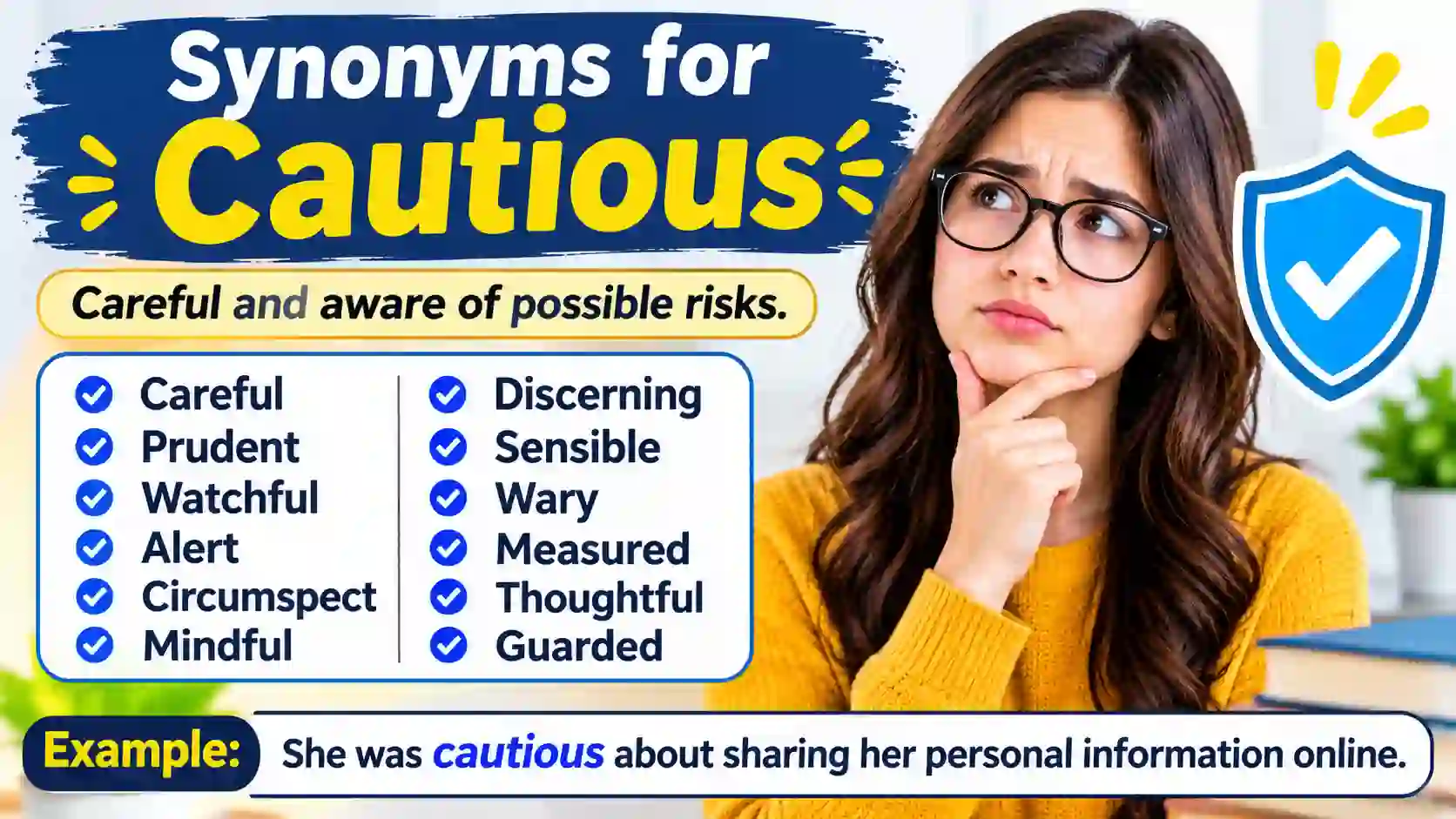
Quick Answer: What Are Synonyms for Cautious?
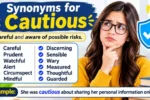
The best synonyms for cautious include careful, wary, prudent, circumspect, vigilant, watchful, guarded, and risk-averse. These words describe different ways of avoiding danger, mistakes, or unwanted results. Careful is the best everyday alternative, while prudent describes wise decisions and wary suggests distrust.
Do you ever think twice before accepting an offer, sharing personal information, or making an important decision? That is an example of being cautious.
The adjective cautious describes someone who thinks about possible dangers or problems before acting. A cautious person does not take unnecessary risks. For example, a cautious driver slows down when the road becomes slippery.
However, English has many other words that express this idea. You can use careful to describe attention to safety, prudent for wise decisions, and wary when someone does not fully trust a situation.
Learning synonyms for cautiousness can improve your essays, emails, blog posts, and everyday conversations. This guide covers 30 useful alternatives, explains their differences, and shows you how to choose the right word.
Pronunciation of Cautious
- IPA (American): /ˈkɑː.ʃəs/
- IPA (British): /ˈkɔː.ʃəs/
- Easy pronunciation: KAH-shuhs (many American accents) or KAW-shuhs (British English).
- Syllables: 2
- Word stress: First syllable.
The main pronunciation difference is the vowel sound. The spelling is identical in American and British English.
Meaning and Part of Speech
Cautious is an adjective that describes someone who avoids unnecessary risks or thinks carefully about possible problems.
Examples:
- My father is cautious about spending money.
- The cautious driver slowed down near the school.
- The company took a cautious approach to expansion.
Word Forms
| Word | Part of speech | Meaning |
| Caution | Noun | Care taken to avoid danger |
| Caution | Verb | To warn someone about danger |
| Cautious | Adjective | Careful about possible risks |
| Cautiously | Adverb | In a careful manner |
| Cautiousness | Noun | The quality of being cautious |
| Incautious | Adjective | Not careful enough |
Grammar: How to Use Cautious in a Sentence
Understanding prepositions helps you use this adjective naturally.
1. Cautious about
Use about when describing a concern or possible action.
- She is cautious about sharing personal information.
- Investors are cautious about buying unfamiliar stocks.
2. Cautious of
Use of when someone is careful because something may be dangerous, unreliable, or unwise.
- Be cautious of unexpected online offers.
- He was cautious of accepting their explanation.
3. Cautious with
Use when describing careful handling or use of something.
- Be cautious with sharp tools.
- She is cautious with her savings.
4. Cautious in
Use it before an activity or area of behavior.
- The manager was cautious in making promises.
- They remained cautious in their negotiations.
Common Sentence Patterns
- Be cautious about something.
- Be cautious of someone or something.
- Be cautious with something.
- Take a cautious approach.
- Exercise caution.
- Remain cautious.
Grammar tip: The comparative form is more cautious, and the superlative is most cautious. For example, “She is more cautious than her brother.”
Quick Synonyms Overview Table
The following words are selected according to meaning, usefulness, and context. Strength describes how closely each word expresses the central idea of avoiding risk, not how intense the word sounds.
| Synonym | Strength | Formality |
| Careful | Strongest | Neutral |
| Wary | Strongest | Neutral |
| Prudent | Strongest | Formal |
| Circumspect | Strongest | Formal |
| Vigilant | Strong | Formal |
| Watchful | Strong | Neutral |
| Guarded | Strong | Neutral |
| Risk-averse | Strong | Business |
| Chary | Strong | Literary |
| Leery | Strong | Informal |
| Judicious | Strong | Formal |
| Alert | Related | Neutral |
| Mindful | Related | Neutral |
| Discreet | Related | Formal |
| Heedful | Related | Literary |
| Sensible | Related | Neutral |
| Attentive | Related | Neutral |
| Conservative | Related | Formal |
| Deliberate | Contextual | Formal |
| Tentative | Contextual | Neutral |
| Hesitant | Contextual | Neutral |
| Timid | Contextual | Neutral |
| Meticulous | Contextual | Formal |
| Observant | Contextual | Neutral |
| Scrupulous | Contextual | Formal |
| Thoughtful | Contextual | Neutral |
| Foresighted | Contextual | Formal |
| Canny | Contextual | Informal |
| Protective | Contextual | Neutral |
| Cagey | Contextual | Informal |
30 Synonyms for Cautious With Examples and Explanations
The first group contains the closest alternatives. The remaining words express related ideas and should only replace cautious when the context supports them.
1. Careful
Meaning: Someone who is careful tries to avoid mistakes, damage, or harm.
Examples:
- Be careful when crossing the busy street.
- She was careful while checking the final report.
Best used when: Describing everyday actions that require attention and safety.
Tone: Neutral, spoken, and written.
CEFR: A2 | Frequency: Very common.
Collocations: careful driver, careful planning, careful examination.
Nuance: Careful is the closest everyday alternative. However, it can describe attention to detail without suggesting fear of danger.
When not to use: Avoid it when you specifically mean distrust or suspicion.
2. Wary
Meaning: Someone who is wary does not fully trust something because it may cause trouble.
Examples:
- The buyer was wary of the unusually cheap offer.
- She became wary after receiving several suspicious messages.
Best used when: Describing suspicion about people, offers, or situations.
Tone: Neutral, conversational, and written.
CEFR: B2 | Frequency: Common.
Collocations: wary of strangers, remain wary, wary attitude.
Nuance: Wary suggests more distrust than careful.
When not to use: Avoid it when someone simply checks their spelling.
3. Prudent
Meaning: A prudent person makes sensible choices after thinking about possible results.
Examples:
- It is prudent to save money for unexpected expenses.
- The company made a prudent decision to reduce unnecessary costs.
Best used when: Discussing finances, business, planning, and important decisions.
Tone: Formal, academic, and business.
CEFR: C1 | Frequency: Common.
Collocations: prudent decision, prudent investment, prudent approach.
Nuance: Prudent emphasizes good judgment rather than fear or suspicion.
When not to use: Avoid it when describing someone who simply watches their surroundings.
4. Circumspect
Meaning: A circumspect person thinks carefully about possible consequences before acting.
Examples:
- The lawyer was circumspect when discussing the case.
- Leaders should be circumspect before making public promises.
Best used when: Discussing sensitive decisions, public statements, and serious matters.
Tone: Formal and academic.
CEFR: C2 | Frequency: Uncommon.
Collocations: circumspect approach, remain circumspect, circumspect judgment.
Nuance: It emphasizes careful consideration of different possible outcomes.
When not to use: Avoid it in simple everyday conversation when careful sounds more natural.
5. Vigilant
Meaning: A vigilant person stays alert to notice possible danger or trouble.
Examples:
- Drivers must remain vigilant near school crossings.
- The security team stayed vigilant against online attacks.
Best used when: Discussing security, safety, threats, and protection.
Tone: Formal and professional.
CEFR: C1 | Frequency: Common.
Collocations: vigilant against threats, remain vigilant, vigilant monitoring.
Nuance: Vigilant suggests continuous attention rather than a single careful decision.
When not to use: Avoid it for ordinary decisions that do not require ongoing attention.
6. Watchful
Meaning: A watchful person pays close attention to what is happening.
Examples:
- The guard kept a watchful eye on the entrance.
- Her parents remained watchful during the school trip.
Best used when: Describing someone who observes their surroundings for possible problems.
Tone: Neutral.
CEFR: B2 | Frequency: Common.
Collocations: watchful eye, watchful parent, remain watchful.
Nuance: Watchful focuses on observation, while prudent focuses on judgment.
When not to use: Avoid it when describing a wise financial decision.
7. Guarded
Meaning: A guarded person does not reveal too much or trust something easily.
Examples:
- The manager gave a guarded response to the question.
- Investors remained guarded about the company’s future.
Best used when: Describing reserved speech, limited trust, or careful behavior.
Tone: Neutral and formal.
CEFR: B2 | Frequency: Common.
Collocations: guarded response, guarded optimism, guarded attitude.
Nuance: Guarded often describes how someone speaks or shares information.
When not to use: Avoid it when you mean physical attention or detailed accuracy.
8. Risk averse
Meaning: A risk-averse person prefers options with fewer possible dangers or losses.
Examples:
- Risk-averse investors often prefer stable investments.
- The business adopted a risk-averse strategy during the uncertain market.
Best used when: Discussing financial decisions, investments, and business planning.
Tone: Formal, academic, and business.
CEFR: C1 | Frequency: Common in professional contexts.
Collocations: risk-averse investor, risk-averse strategy, risk-averse approach.
Nuance: This is more specific than cautious because it describes a preference for lower risk.
When not to use: Avoid it for ordinary activities such as listening carefully in class.
9. Chary
Meaning: A chary person is reluctant to trust something or take a risk.
Examples:
- She was chary of accepting an offer without checking the details.
- The company remained chary about expanding too quickly.
Best used when: Describing reluctance caused by possible risks.
Tone: Literary and formal.
CEFR: C2 | Frequency: Rare.
Collocations: chary of promises, chary of spending, remain chary.
Nuance: Chary is close to wary but is less common and often sounds literary.
When not to use: Avoid it in beginner-level writing.
10. Leery
Meaning: A leery person feels suspicious about something.
Examples:
- I am leery of websites that promise instant wealth.
- The customer was leery of the seller’s unusual payment request.
Best used when: Expressing informal suspicion about an offer or person.
Tone: Informal, especially familiar in American English.
CEFR: C1 | Frequency: Common.
Collocations: leery of strangers, leery of offers, feel leery.
Nuance: Leery is similar to wary but more conversational.
When not to use: Avoid it in highly formal academic writing.
11. Judicious
Meaning: A judicious person makes sensible decisions using good judgment.
Examples:
- The editor made a judicious change to the article.
- A judicious use of money can prevent future problems.
Best used when: Describing thoughtful choices and balanced decisions.
Tone: Formal, academic, and professional.
CEFR: C1–C2 | Frequency: Uncommon.
Collocations: judicious decision, judicious use, judicious selection.
Nuance: Judicious focuses on the quality of a decision.
When not to use: Avoid it when you mean someone is suspicious of another person.
12. Alert
Meaning: An alert person is aware of their surroundings and ready to notice danger.
Examples:
- The lifeguard stayed alert near the swimming pool.
- Stay alert when walking through a busy parking lot.
Best used when: Describing awareness and readiness.
Tone: Neutral and professional.
CEFR: B1 | Frequency: Very common.
Collocations: stay alert, alert driver, alert to danger.
Nuance: Alert describes awareness, not necessarily careful decision-making.
When not to use: Avoid it when discussing long-term financial planning.
13. Mindful
Meaning: A mindful person remembers to consider something important before acting.
Examples:
- Be mindful of your words during a difficult conversation.
- She remained mindful of the family’s limited budget.
Best used when: Discussing responsibilities, consequences, and the needs of others.
Tone: Neutral and professional.
CEFR: B2 | Frequency: Common.
Collocations: mindful of others, mindful approach, remain mindful.
Nuance: Mindful emphasizes awareness and consideration.
When not to use: Avoid it when you specifically mean suspicion or distrust.
14. Discreet
Meaning: A discreet person acts carefully to protect private information or avoid unwanted attention.
Examples:
- The assistant made a discreet inquiry about the complaint.
- Please be discreet when discussing the private meeting.
Best used when: Discussing confidentiality and sensitive situations.
Tone: Formal and professional.
CEFR: C1 | Frequency: Common.
Collocations: discreet inquiry, discreet manner, discreet conversation.
Nuance: Discreet concerns privacy and tact rather than general safety.
When not to use: Do not confuse discreet with discrete, which means separate or distinct.
15. Heedful
Meaning: A heedful person pays attention to advice, instructions, or warnings.
Examples:
- The heedful traveler followed the safety instructions.
- She was heedful of the teacher’s warning.
Best used when: Describing someone who listens to guidance.
Tone: Literary and formal.
CEFR: C2 | Frequency: Rare.
Collocations: heedful of warnings, heedful attention, heedful listener.
Nuance: It focuses on paying attention to advice rather than independently judging risk.
When not to use: Avoid it in casual conversation.
16. Sensible
Meaning: A sensible person makes practical and reasonable decisions.
Examples:
- Wearing a helmet is a sensible safety measure.
- It was sensible to compare prices before buying the laptop.
Best used when: Describing practical choices that reduce problems.
Tone: Neutral and everyday.
CEFR: B1 | Frequency: Very common.
Collocations: sensible choice, sensible approach, sensible precautions.
Nuance: Sensible emphasizes practical judgment.
When not to use: Avoid it when you mean someone is constantly watching for danger.
17. Attentive
Meaning: An attentive person listens or looks carefully at something.
Examples:
- The attentive nurse noticed a change in the patient’s condition.
- He was attentive during the safety lesson.
Best used when: Describing concentration and attention to instructions or people.
Tone: Neutral, academic, and professional.
CEFR: B1 | Frequency: Very common.
Collocations: attentive listener, attentive student, attentive care.
Nuance: Attentive describes concentration rather than risk avoidance.
When not to use: Avoid it when distrust is the main idea.
18. Conservative
Meaning: A conservative approach avoids major risks or sudden changes.
Examples:
- The investor chose a conservative financial strategy.
- The company used a conservative estimate for its annual budget.
Best used when: Discussing investments, estimates, planning, and stability.
Tone: Formal and business.
CEFR: B2 | Frequency: Very common.
Collocations: conservative estimate, conservative approach, conservative investment.
Nuance: Conservative suggests a preference for stability, not simply careful behavior.
When not to use: Avoid it when describing someone watching for immediate danger.
19. Deliberate
Meaning: A deliberate action is planned or carried out with careful thought.
Examples:
- She took deliberate steps across the icy floor.
- The committee made a deliberate decision after reviewing the evidence.
Best used when: Emphasizing controlled action or thoughtful decisions.
Tone: Neutral and formal.
CEFR: B2 | Frequency: Very common.
Collocations: deliberate action, deliberate choice, deliberate approach.
Nuance: Deliberate can also mean intentional. It is not always a synonym for cautious.
When not to use: Avoid it when suspicion or distrust is the main meaning.
20. Tentative
Meaning: A tentative plan or decision is not final and may change.
Examples:
- The team made a tentative plan for next month’s event.
- She took a tentative step into the unfamiliar room.
Best used when: Describing uncertain plans, early suggestions, or hesitant actions.
Tone: Neutral and academic.
CEFR: C1 | Frequency: Common.
Collocations: tentative agreement, tentative plan, tentative steps.
Nuance: Tentative suggests uncertainty rather than good risk management.
When not to use: Avoid it as a general replacement for careful.
21. Hesitant
Meaning: A hesitant person pauses because they are unsure about what to do.
Examples:
- She was hesitant to sign the agreement.
- He gave a hesitant answer during the meeting.
Best used when: Describing uncertainty or reluctance.
Tone: Neutral.
CEFR: B1 | Frequency: Very common.
Collocations: hesitant response, hesitant to agree, feel hesitant.
Nuance: Hesitant focuses on uncertainty, while cautious focuses on possible risks.
When not to use: Avoid it when someone acts confidently but takes safety precautions.
22. Timid
Meaning: A timid person feels shy or afraid to act.
Examples:
- The timid puppy stayed close to its owner.
- He gave a timid reply during the meeting.
Best used when: Describing shyness, fear, or a lack of confidence.
Tone: Neutral, sometimes negative.
CEFR: B2 | Frequency: Common.
Collocations: timid person, timid response, timid approach.
Nuance: Timid is not an exact synonym. Cautious behavior can be confident and sensible, while timid behavior often comes from fear.
When not to use: Avoid it when praising someone for making a wise decision.
23. Meticulous
Meaning: A meticulous person pays very close attention to small details.
Examples:
- The accountant was meticulous when checking the figures.
- She kept meticulous records of every payment.
Best used when: Describing detailed work that needs accuracy.
Tone: Formal, academic, and professional.
CEFR: C1 | Frequency: Common.
Collocations: meticulous research, meticulous planning, meticulous attention to detail.
Nuance: Meticulous emphasizes precision rather than avoiding risk.
When not to use: Avoid it when the main concern is danger rather than accuracy.
24. Observant
Meaning: An observant person notices details and changes around them.
Examples:
- The observant teacher noticed that a student looked upset.
- An observant driver spotted the warning sign early.
Best used when: Describing someone who notices things others may miss.
Tone: Neutral and academic.
CEFR: B2 | Frequency: Common.
Collocations: observant person, observant eye, highly observant.
Nuance: Observant describes the ability to notice things, not necessarily the choice to avoid risks.
When not to use: Avoid it when you mean wise planning.
25. Scrupulous
Meaning: A scrupulous person follows rules and avoids dishonest or improper actions.
Examples:
- The accountant was scrupulous about reporting every expense.
- The journalist used scrupulous methods to verify the facts.
Best used when: Discussing honesty, accuracy, ethics, and professional standards.
Tone: Formal and academic.
CEFR: C1 | Frequency: Uncommon.
Collocations: scrupulous attention, scrupulous honesty, scrupulous care.
Nuance: Scrupulous often carries a strong moral or ethical meaning.
When not to use: Avoid it when describing someone who simply avoids physical danger.
26. Thoughtful
Meaning: A thoughtful person considers other people or possible results before acting.
Examples:
- He gave a thoughtful answer to the difficult question.
- She made a thoughtful choice after reviewing the options.
Best used when: Describing consideration, reflection, and careful judgment.
Tone: Neutral and positive.
CEFR: B1 | Frequency: Very common.
Collocations: thoughtful decision, thoughtful response, thoughtful planning.
Nuance: Thoughtful can also mean kind or considerate.
When not to use: Avoid it when the intended meaning is suspicion.
27. Foresighted
Meaning: A foresighted person thinks about future problems before they happen.
Examples:
- The foresighted owner saved money for equipment repairs.
- Her foresighted planning helped the project avoid delays.
Best used when: Describing preparation for future risks or needs.
Tone: Formal and literary.
CEFR: C1 | Frequency: Uncommon.
Collocations: foresighted planning, foresighted leadership, foresighted decision.
Nuance: Foresighted emphasizes thinking ahead rather than reacting to present danger.
When not to use: Avoid it for someone who is simply watching their surroundings.
28. Canny
Meaning: A canny person uses practical intelligence to make good decisions and avoid problems.
Examples:
- The canny buyer waited for a better price.
- She made a canny investment after studying the market.
Best used when: Describing clever decisions and practical judgment.
Tone: Informal and sometimes literary.
CEFR: C1 | Frequency: Uncommon.
Collocations: canny investor, canny move, canny decision.
Nuance: Canny often suggests cleverness as well as caution.
When not to use: Avoid it when you mean someone is simply nervous or afraid.
29. Protective
Meaning: A protective person or action aims to keep someone or something safe.
Examples:
- The protective parent checked the playground before the children entered.
- Protective measures helped prevent damage to the equipment.
Best used when: Describing actions that prevent harm.
Tone: Neutral and professional.
CEFR: B1 | Frequency: Very common.
Collocations: protective measures, protective behavior, protective clothing.
Nuance: Protective focuses on keeping something safe, while cautious focuses on careful behavior.
When not to use: Avoid it when you mean suspicion or hesitation.
30. Cagey
Meaning: A cagey person avoids sharing information or revealing their intentions.
Examples:
- The player was cagey about his future plans.
- She gave a cagey response to the reporter.
Best used when: Someone deliberately keeps information private.
Tone: Informal and conversational.
CEFR: C1 | Frequency: Uncommon.
Collocations: cagey answer, cagey about plans, remain cagey.
Nuance: Cagey can suggest secrecy or clever avoidance, not simply safety awareness.
When not to use: Avoid it when describing someone who is simply careful with money or physical safety.
Choose the Right Synonym: Side by Side Comparisons
The most useful way to choose a synonym is to identify the exact reason someone is acting cautiously.
| Word | Main idea | Natural example |
| Careful | Avoiding mistakes | Be careful with the glass. |
| Wary | Distrust or suspicion | She is wary of strangers. |
| Prudent | Wise judgment | Saving money is prudent. |
| Vigilant | Staying alert | Stay vigilant against scams. |
| Circumspect | Thinking about consequences | Be circumspect in public statements. |
| Guarded | Holding back information | He gave a guarded answer. |
| Risk-averse | Preferring low risk | She is a risk-averse investor. |
| Hesitant | Feeling unsure | He was hesitant to agree. |
| Timid | Feeling shy or afraid | The timid child stayed quiet. |
| Meticulous | Checking small details | She made a meticulous review. |
Which Synonym Should You Use?
- Use care for everyday safety and accuracy.
- Use wary when you do not fully trust something.
- Use prudent when making a wise decision.
- Use vigilant when watching for danger.
- Use circumspect in formal or sensitive situations.
- Use risk-averse when discussing a preference for low-risk choices.
- Use hesitation when someone is unsure.
- Use meticulousness when attention to detail matters.
Three Words That Are Often Confused
Cautious vs. Careful
A cautious person considers possible risks before acting. A careful person pays attention to avoid mistakes or harm. A cautious person may also be careful, but the words do not always have the same meaning.
Cautious vs. Wary
Cautious describes general care to avoid problems. Wary suggests suspicion or concern about a particular person or situation.
Cautious vs. Prudent
Cautious emphasizes avoiding unnecessary risks. Prudent emphasizes making wise choices after considering possible consequences.
Synonym Categories
Strongest Synonyms
These are the closest alternatives when the sentence involves avoiding danger or making careful decisions:
- Careful
- Wary
- Prudent
- Circumspect
- Vigilant
- Watchful
- Guarded
- Risk-averse
- Chary
- Leery
- Judicious
Strong Related Words
These express specific forms of attention or careful behavior:
- Alert
- Mindful
- Discreet
- Heedful
- Sensible
- Attentive
- Conservative
Context-Dependent Alternatives
These are not exact replacements, but they can work in certain sentences:
- Deliberate
- Tentative
- Hesitant
- Timid
- Meticulous
- Observant
- Scrupulous
- Thoughtful
- Foresighted
- Canny
- Protective
- Cagey
Common Mistakes When Using Cautious Synonyms
Mistake 1
Mistake: She is cautious about spending money.
Correction: She is cautious about spending money.
Explanation: Use about before a noun or an -ing verb when describing a concern.
Mistake 2
Mistake: He is very discreet while driving in heavy rain.
Correction: He is very careful while driving in heavy rain.
Explanation: Discreet usually relates to privacy and avoiding unwanted attention.
Mistake 3
Mistake: The timid manager made a wise financial decision.
Correction: The prudent manager made a wise financial decision.
Explanation: Timid suggests fear or low confidence. Prudent describes good judgment.
Mistake 4
Mistake: The company was vigilant about making a long-term financial plan.
Correction: The company was prudent when making a long-term financial plan.
Explanation: Vigilant means staying alert, while prudent means using good judgment.
Mistake 5
Mistake: The investor was meticulous about avoiding every possible financial risk.
Correction: The investor was risk-averse and preferred investments with lower potential losses.
Explanation: Meticulous focuses on details. Risk-averse describes a preference for lower risk.
Writing Tips: How to Use Cautious Synonyms Naturally
Different types of writing require different vocabulary.
- Essays: Use prudent, judicious, and circumspect when discussing decisions and consequences.
- Emails: Use careful, mindful, and discreet when discussing sensitive matters.
- Blog posts: Use wary, alert, and watchful when explaining safety or online risks.
- Stories: Use timid, hesitant, guarded, and watchful to describe characters.
- Social media: Use careful, wary, and leery in conversational sentences.
- Professional communication: Use risk-averse, prudent, vigilant, and meticulous when appropriate.
- Daily conversations: Use careful, sensible, wary, and hesitant.
Writing tip: Do not replace every occurrence of caution with a different word just to avoid repetition. Choose a synonym that preserves the original meaning and sounds natural in the sentence.
American vs. British English
The spelling of cautious is the same in American and British English. Both varieties use the word to describe someone who avoids unnecessary risks.
| Feature | American English | British English |
| Spelling | Cautious | Cautious |
| Meaning | Careful about risks | Careful about risks |
| Common IPA | /ˈkɑːʃəs/ | /ˈkɔːʃəs/ |
| Everyday alternative | Careful | Careful |
| Informal alternative | Leery | Wary |
The pronunciation shown represents common standard dictionary pronunciations, not every regional accent.
There is no American or British spelling difference in the adjective. Wary and careful are widely understood in both varieties. Leery is particularly familiar in American informal English.
Word Origin and Etymology of Cautious
The word cautious developed from caution, with the adjective-forming suffix -ous. Its deeper roots trace back to Latin cautus, meaning careful or heedful, from cavere, meaning to take care or be on one’s guard.
The adjective entered English in the 17th century. Oxford Learner’s Dictionaries identifies its origin as the mid-17th century.
Word development:
- Latin: cautus (careful or heedful)
- Latin: cavere (to take care)
- English: caution (care or warning)
- English: cautious (showing care to avoid danger)
The suffix -ous changes the related noun into an adjective.
CEFR Levels and Word Frequency
The following table gives approximate learning guidance. These are editorial estimates, not official CEFR classifications or measured corpus rankings.
| Word | Approximate CEFR | Frequency |
| Careful | A2 | Very common |
| Alert | B1 | Very common |
| Sensible | B1 | Very common |
| Hesitant | B1 | Very common |
| Attentive | B1 | Very common |
| Wary | B2 | Common |
| Watchful | B2 | Common |
| Mindful | B2 | Common |
| Guarded | B2 | Common |
| Prudent | C1 | Common |
| Vigilant | C1 | Common |
| Circumspect | C2 | Uncommon |
| Chary | C2 | Rare |
| Heedful | C2 | Rare |
How to learn these words:
- Beginners should start with careful, alert, and sensible.
- Intermediate learners can practice being wary, watchful, and mindful.
- Advanced learners can study prudent, vigilant, and circumspect.
Antonyms of Cautious
An antonym is a word with the opposite meaning.
| Antonym | Meaning | Example |
| Careless | Not paying enough attention | He was careless with the documents. |
| Reckless | Taking dangerous risks | The driver made a reckless turn. |
| Rash | Acting without enough thought | It was a rash decision. |
| Heedless | Ignoring possible danger | They were heedless of the warning. |
| Impulsive | Acting without planning | She made an impulsive purchase. |
| Foolhardy | Taking foolish risks | Climbing alone was foolhardy. |
| Incautious | Not careful enough | His incautious remarks caused trouble. |
| Imprudent | Not showing good judgment | It was an imprudent financial choice. |
Related Expressions and Phrases
These common expressions help you communicate the idea of caution naturally.
- Better safe than sorry: It is wiser to prevent a problem than regret it later.
- Play it safe: Choose the option with less risk.
- Exercise caution: Act carefully to avoid danger.
- Proceed with care: Continue while paying attention.
- Think twice: Consider something carefully before doing it.
- On guard: Ready to notice or respond to danger.
- Err on the side of caution: Choose the safer option when uncertain.
- Look before you leap: Think about the consequences before acting.
- Keep your eyes open: Stay alert and notice what is happening.
Word Family of Cautious
| Word | Part of speech | Meaning |
| Caution | Noun | Care taken to avoid danger |
| Caution | Verb | Warn someone |
| Cautious | Adjective | Careful about risks |
| Cautiously | Adverb | In a careful manner |
| Cautiousness | Noun | The quality of being cautious |
| Incautious | Adjective | Not careful enough |
Frequently Asked Questions
1. What are the best synonyms for cautious?
The best synonyms for cautious include careful, prudent, wary, vigilant, watchful, circumspect, and guarded. Careful work in everyday situations, while prudent describes wise decisions. Wary expresses suspicion, and vigilant describes staying alert to possible danger.
2. What is a stronger word for cautious?
Prudent, circumspect, and vigilant express specific forms of caution. Prudent emphasizes wise judgment, circumspect emphasizes careful thought before acting, and vigilant suggests continuous attention to possible danger. Choose the word that best matches your intended meaning.
3. What is the difference between cautious and careful?
Cautious usually describes someone who considers possible danger or unwanted results before acting. Careful focuses more on avoiding mistakes, damage, or accidents. A cautious investor avoids unnecessary financial risks, while a careful student checks spelling before submitting an assignment.
4. What is a positive synonym for cautious?
Prudent, sensible, thoughtful, and judicious are positive alternatives. These words suggest that someone makes wise decisions rather than acting out of fear. For example, a prudent person saves money for emergencies and considers possible consequences before making an important purchase.
5. What is the opposite of cautious?
Common opposites include reckless, careless, rash, heedless, and incautious. Reckless describes someone who takes dangerous risks without thinking. Careless describes someone who does not pay enough attention, while rash refers to decisions made too quickly.
6. Is wary the same as cautious?
Wary and cautious have similar meanings, but they are not identical. Wary usually suggests suspicion or distrust about a possible danger, while cautious describes general care to avoid risks or mistakes. Someone can be cautious about driving but wary of an unfamiliar person.
7. What is a formal synonym for cautious?
Prudent, circumspect, judicious, and vigilant are useful formal alternatives. Prudent works well in business and financial writing. Circumspect suits sensitive discussions, while judicious describes decisions based on good judgment.
8. What is the difference between cautious and timid?
Cautious describes careful behavior based on possible risks. Timid describes someone who feels shy, nervous, or afraid to act. A cautious person can still be confident and brave, while a timid person may avoid action because of fear or low confidence.
Vocabulary Practice: Test Your Knowledge
Test what you have learned with these short exercises.
Exercise 1: Multiple Choice Questions
1. Which word describes someone who makes wise decisions after considering risks?
A. Timid
B. Prudent
C. Impulsive
D. Careless
2. Which synonym best describes someone who does not trust an unfamiliar website?
A. Wary
B. Thoughtful
C. Attentive
D. Protective
3. Which word means staying alert to possible danger?
A. Hesitant
B. Discreet
C. Vigilant
D. Timid
4. Choose the grammatically correct sentence.
A. She is cautious about sharing information.
B. She is cautious about sharing information.
C. She is cautious at sharing information.
D. She is cautious about sharing information.
5. Which word best describes someone who protects private information?
A. Alert
B. Discreet
C. Reckless
D. Observant
Exercise 2: Fill in the Blanks
Choose from: careful, wary, prudent, vigilant, hesitant.
- It is ______ to check a contract before signing it.
- The guard remained ______ throughout the night.
- She was ______ of the suspicious email.
- Be ______ when using sharp tools.
- He felt ______ about accepting the invitation.
Exercise 3: Rewrite the Sentences
Replace the bold word with a suitable alternative without changing the main meaning.
- The driver was cautious on the icy road.
- The investor was cautious about buying unfamiliar stocks.
- The guard was cautious during the night shift.
Exercise 4: Match the Words
Match each word with its correct meaning.
| Word | Meaning |
| 1. Prudent | A. Suspicious or distrustful |
| 2. Wary | B. Paying attention to danger |
| 3. Vigilant | C. Making wise decisions |
| 4. Meticulous | D. Checking small details |
Answer Key
Exercise 1:
- B. Prudent
- A. Wary
- C. Vigilant
- B. She is cautious about sharing information.
- B. Discreet
2:
- Prudent
- Vigilant
- Wary
- Careful
- Hesitant
3: Possible answers:
- The driver was careful on the icy road.
- The investor was wary of buying unfamiliar stocks.
- The guard was watchful during the night shift.
4:
- C
- A
- B
- D
Conclusion
Learning synonyms for cautious helps you express ideas with greater accuracy and confidence. Words like careful, wary, prudent, and vigilant each add a different meaning to your writing and speech.
Practice these alternatives in emails, essays, schoolwork, and daily conversations. Choose words based on context instead of simply replacing one word with another. A stronger vocabulary starts with understanding how words work.
References and Further Reading
- Cambridge Dictionary: Cautious Synonyms
- Oxford Learner’s Dictionaries: Cautious
- Merriam-Webster: Cautious
- Thesaurus.com: Cautious Synonyms and Antonyms
- Dictionary.com: Cautious

Synonorm is a trusted English vocabulary resource created to help readers find the right words and understand the differences between similar terms. We provide clear explanations of synonyms, meanings, examples, usage, and alternatives. Our content makes vocabulary easier to learn and apply in everyday, academic, and professional English. Synonorm is designed for students, writers, ESL learners, professionals, and anyone who wants to improve their English vocabulary and communicate more clearly.