Quick Answer: What Are Synonyms for Trickery?
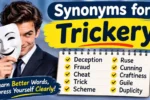
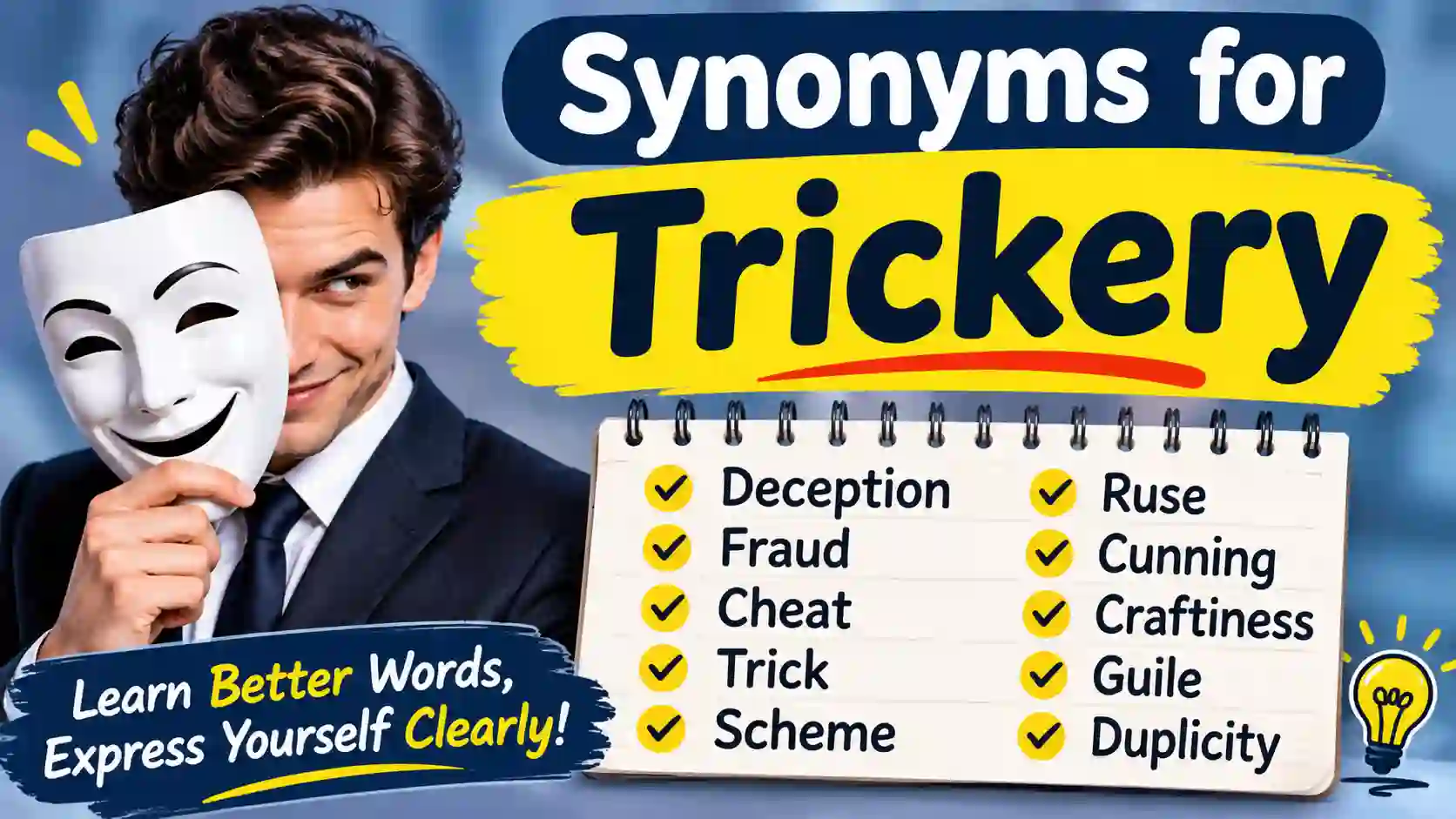
The best synonyms for trickery include deception, deceit, dishonesty, fraud, cheating, guile, duplicity, chicanery, subterfuge, and underhandedness. These words describe dishonest actions or methods used to mislead people. Some refer to financial wrongdoing, while others describe hidden intentions, false appearances, or clever schemes.
Have you ever discovered that someone was not telling you the truth? Perhaps a seller hid important details about a product, or someone made a false promise to gain your trust. You might describe such behavior as trickery.
Trickery means using dishonest tricks or misleading methods to fool someone or gain an advantage. However, English has many other words for this idea. Each alternative has its own meaning, tone, and purpose.
For example, fraud often relates to financial or legal wrongdoing, while duplicity describes someone who hides their real intentions. Similarly, guile refers to cleverness used to deceive others.
Learning synonyms for trickery helps students, teachers, writers, bloggers, and professionals express ideas more clearly. This guide explains 30 useful alternatives with simple definitions, original examples, common word combinations, and practical usage advice.
Pronunciation of Trickery
- Word: Trickery
- IPA (American): /ˈtrɪk.ɚ.i/
- IPA (British): /ˈtrɪk.ə.ri/
- Pronunciation: TRIK-uh-ree
- Syllables: Three
- Primary stress: First syllable
The main pronunciation difference is the vowel in the second syllable. American English commonly uses a reduced rhotic vowel, while British English uses a non-rhotic vowel.
Part of Speech
Trickery is a noun. It describes the practice of using dishonest tricks to deceive or cheat people.
Examples:
- The company used trickery to attract customers.
- The magician entertained the audience with visual trickery.
Related Word Forms
| Word | Part of Speech | Meaning |
| Trick | Noun / Verb | An action used to deceive or surprise |
| Tricky | Adjective | Difficult, complicated, or deceptive |
| Trickster | Noun | Someone who uses tricks |
| Trickery | Noun | The practice of using tricks |
Grammar Rules and Usage
Trickery is normally an uncountable noun when it describes dishonest behavior in general.
Common sentence patterns:
- Trickery to gain an advantage.
- Resort to trickery.
- Use trickery against someone.
- Accuse someone of trickery.
- Expose someone’s trickery.
- Win through trickery.
Examples:
- The investigation exposed the company’s trickery.
- The team refused to win through trickery.
American English also permits the plural form trickeries in certain contexts, but it is uncommon. For ordinary writing, use trickery as an uncountable noun.
Quick Synonyms Overview
| Synonym | Strength | Formality |
| Deception | Strongest | Neutral |
| Deceit | Strongest | Formal |
| Fraud | Strongest | Legal / Formal |
| Dishonesty | Strongest | Neutral |
| Cheating | Strong | Neutral |
| Duplicity | Strongest | Formal |
| Guile | Strong | Literary |
| Chicanery | Strongest | Formal |
| Deviousness | Strong | Formal |
| Subterfuge | Strong | Formal |
| Underhandedness | Strong | Neutral |
| Skulduggery | Strong | Informal |
| Swindling | Strong | Neutral |
| Double-dealing | Strong | Neutral |
| Imposture | Related | Literary |
| Artifice | Related | Literary |
| Craftiness | Related | Neutral |
| Stratagem | Related | Formal |
| Ruse | Related | Neutral |
| Hoax | Related | Neutral |
| Scam | Strong | Informal |
| Con | Strong | Informal |
| Pretense | Related | Neutral |
| Quackery | Context-specific | Formal |
| Flimflam | Related | Informal |
| Bunkum | Related | Informal |
| Jiggery-pokery | Related | Informal |
| Monkey business | Related | Informal |
| Funny business | Related | Informal |
| Sleight of hand | Context-specific | Neutral |
The strength labels indicate how closely a word matches the dishonest sense of trickery. Related words may describe only one particular form of trickery.
30 Synonyms for Trickery With Examples and Explanations
1. Deception
Meaning: Deception means making someone believe something that is not true.
Examples:
- The advertisement relied on deception to increase sales.
- His deception damaged the relationship.
Best Used When: You need a general alternative for misleading actions or false information.
Tone: Neutral, formal, academic.
CEFR: B2 (approximate) | Frequency: Very common.
Collocations: deliberate deception, deception tactics, expose deception.
When Not to Use: Avoid it for harmless surprises that do not mislead anyone.
2. Deceit
Meaning: Deceit is deliberate dishonesty used to mislead another person.
Examples:
- Her deceit became clear after the investigation.
- The friendship ended because of repeated deceit.
Best Used When: You want to emphasize dishonest behavior or betrayal.
Tone: Formal, literary.
CEFR: C1 (approximate) | Frequency: Common.
Collocations: deliberate deceit, lies and deceit, act of deceit.
3. Fraud
Meaning: Fraud is dishonest behavior used to obtain money, property, or another benefit.
Examples:
- The company faced an investigation into financial fraud.
- Officials discovered fraud in the insurance claims.
Best Used When: Discussing financial wrongdoing or legally serious deception.
Tone: Formal, legal, business.
CEFR: B2 (approximate) | Frequency: Very common.
Collocations: financial fraud, insurance fraud, commit fraud.
When Not to Use: Do not use fraud for every small trick. It carries a much more serious meaning.
4. Dishonesty
Meaning: Dishonesty means not telling the truth or acting unfairly.
Examples:
- The manager questioned the employee’s dishonesty.
- Academic dishonesty can damage a student’s reputation.
Best Used When: Describing general behavior that lacks honesty.
Tone: Neutral, formal, academic.
CEFR: B1 (approximate) | Frequency: Very common.
Collocations: academic dishonesty, financial dishonesty, deliberate dishonesty.
5. Cheating
Meaning: Cheating means breaking rules or acting unfairly to gain an advantage.
Examples:
- The player was removed from the tournament for cheating.
- Cheating during examinations can lead to serious consequences.
Best Used When: Someone breaks agreed rules to gain an unfair advantage.
Tone: Neutral, informal, academic.
CEFR: A2 (approximate) | Frequency: Very common.
Collocations: cheating on a test, cheating in sports, academic cheating.
6. Duplicity
Meaning: Duplicity means hiding your real intentions while pretending to be honest.
Examples:
- The director’s duplicity surprised the entire board.
- She recognized his duplicity before signing the agreement.
Best Used When: Describing double-dealing or deliberate false appearances.
Tone: Formal, literary, academic.
CEFR: C1 (approximate) | Frequency: Uncommon.
Collocations: political duplicity, deliberate duplicity, reveal duplicity.
7. Guile
Meaning: Guile is cleverness used to deceive or influence someone.
Examples:
- The character escaped through guile rather than strength.
- He used guile to gain the investor’s confidence.
Best Used When: Describing clever methods that involve deception.
Tone: Literary, formal.
CEFR: C1 (approximate) | Frequency: Uncommon.
Collocations: clever guile, use guile, charm and guile.
8. Chicanery
Meaning: Chicanery means dishonest tricks or arguments used to gain an advantage.
Examples:
- The investigation uncovered political chicanery.
- The court examined allegations of financial chicanery.
Best Used When: Discussing dishonest practices in politics, business, or legal matters.
Tone: Formal, academic, literary.
CEFR: C2 (approximate) | Frequency: Rare.
Collocations: political chicanery, legal chicanery, financial chicanery.
9. Deviousness
Meaning: Deviousness is the quality of using dishonest or indirect methods to achieve something.
Examples:
- His deviousness became clear during the negotiations.
- The plan depended on secrecy and deviousness.
Best Used When: Describing someone who uses dishonest or indirect methods.
Tone: Formal, neutral.
CEFR: C1 (approximate) | Frequency: Uncommon.
Collocations: political deviousness, deliberate deviousness, display deviousness.
10. Subterfuge
Meaning: Subterfuge is a secret or dishonest method used to hide the truth.
Examples:
- The manager used subterfuge to conceal the real figures.
- Their subterfuge was exposed during the audit.
Best Used When: Someone hides their real intentions through secret methods.
Tone: Formal, literary, academic.
CEFR: C1 (approximate) | Frequency: Uncommon.
Collocations: political subterfuge, use subterfuge, elaborate subterfuge.
11. Underhandedness
Meaning: Underhandedness is the use of unfair or dishonest methods.
Examples:
- The team complained about their opponent’s underhandedness.
- His underhandedness damaged the business partnership.
Best Used When: Describing secret and unfair behavior.
Tone: Neutral, formal.
CEFR: C1 (approximate) | Frequency: Uncommon.
Collocations: political underhandedness, business underhandedness, acts of underhandedness.
12. Skulduggery
Meaning: Skulduggery means secret, dishonest, or suspicious activity.
Examples:
- The newspaper reported financial skulduggery.
- The investigation uncovered political skulduggery.
Best Used When: Describing shady activities, especially in business or politics.
Tone: Informal, journalistic, literary.
CEFR: C2 (approximate) | Frequency: Uncommon.
Collocations: financial skulduggery, political skulduggery, expose skulduggery.
13. Swindling
Meaning: Swindling is cheating someone out of money or property through dishonest methods.
Examples:
- The investigation revealed a pattern of swindling.
- Customers accused the agent of swindling older people people.
Best Used When: Discussing schemes that involve stealing money through deception.
Tone: Neutral, formal.
CEFR: B2 (approximate) | Frequency: Common.
Collocations: financial swindling, swindling customers, swindling investors.
14. Double Dealing
Meaning: Double-dealing means behaving dishonestly while secretly supporting different interests.
Examples:
- The partners discovered double-dealing during the negotiations.
- His double-dealing destroyed the team’s trust.
Best Used When: Someone acts dishonestly toward people on different sides of an agreement.
Tone: Neutral, formal.
CEFR: C1 (approximate) | Frequency: Uncommon.
Collocations: political double-dealing, business double-dealing, accuse someone of double-dealing.
15. Imposture
Meaning: Imposture is pretending to be someone or something that you are not.
Examples:
- His imposture was exposed when officials checked his identity.
- The investigation uncovered an elaborate imposture.
Best Used When: Someone falsely claims an identity, position, or status.
Tone: Formal, literary.
CEFR: C2 (approximate) | Frequency: Rare.
Collocations: deliberate imposture, act of imposture, expose imposture.
16. Artifice
Meaning: Artifice is a clever device or method used to create a false impression.
Examples:
- The advertisement used artifice to make the product look more effective.
- Her friendly manner concealed a carefully planned artifice.
Best Used When: Describing a carefully constructed trick or misleading appearance.
Tone: Formal, literary.
CEFR: C1 (approximate) | Frequency: Uncommon.
Collocations: clever artifice, literary artifice, artifice of persuasion.
17. Craftiness
Meaning: Craftiness is the ability to use clever methods, sometimes to deceive others.
Examples:
- The fox escaped through craftiness and patience.
- His craftiness helped him avoid the difficult question.
Best Used When: Highlighting clever behavior that may have a dishonest purpose.
Tone: Neutral, literary.
CEFR: B2 (approximate) | Frequency: Uncommon.
Collocations: clever craftiness, display craftiness, political craftiness.
18. Stratagem
Meaning: A stratagem is a carefully planned action used to achieve a goal, sometimes through deception.
Examples:
- The general used a clever stratagem to surprise the enemy.
- The fake invitation was a stratagem to gain access.
Best Used When: Describing a planned trick or tactical method.
Tone: Formal, academic, literary.
CEFR: C1 (approximate) | Frequency: Uncommon.
Collocations: clever stratagem, military stratagem, employ a stratagem.
19. Ruse
Meaning: A ruse is a planned trick used to hide the truth or achieve a purpose.
Examples:
- The false appointment was a ruse to enter the building.
- He used a friendly conversation as a ruse to learn the password.
Best Used When: Describing one particular trick with a clear purpose.
Tone: Neutral, literary.
CEFR: C1 (approximate) | Frequency: Common.
Collocations: clever ruse, military ruse, use a ruse.
20. Hoax
Meaning: A hoax is a deliberately false story or trick presented as real.
Examples:
- The viral news story turned out to be a hoax.
- Someone created a fake emergency message as a hoax.
Best Used When: Discussing fake news, false claims, or misleading stories.
Tone: Neutral, informal, journalistic.
CEFR: B2 (approximate) | Frequency: Common.
Collocations: internet hoax, elaborate hoax, expose a hoax.
21. Scam
Meaning: A scam is a dishonest scheme designed to cheat people, often out of money.
Examples:
- The fake investment website was a scam.
- Police warned residents about an online shopping scam.
Best Used When: Discussing modern financial or online deception.
Tone: Informal, neutral, business.
CEFR: B1 (approximate) | Frequency: Very common.
Collocations: online scam, phone scam, investment scam.
22. Con
Meaning: A con is a dishonest trick used to gain money or trust.
Examples:
- The stranger tried to pull a con on the tourists.
- The investment offer was nothing more than a con.
Best Used When: Describing an informal confidence trick or dishonest scheme.
Tone: Informal, spoken English.
CEFR: B2 (approximate) | Frequency: Common.
Collocations: confidence con, pull a con, elaborate con.
23. Pretense (American) / Pretence (British)
Meaning: Pretense is a false appearance or claim used to hide the truth.
Examples:
- He entered the office under the pretense of delivering a package.
- Her apology was only a pretense.
Best Used When: Someone pretends to have a reason, feeling, or quality that is not genuine.
Tone: Neutral, formal.
CEFR: B2 (approximate) | Frequency: Common.
Collocations: false pretense, under the pretense of, maintain a pretense.
24. Quackery
Meaning: Quackery is the use of false claims or dishonest methods while pretending to offer medical knowledge or treatment.
Examples:
- The website promoted dangerous medical quackery.
- The doctor warned patients about unproven health treatments sold through quackery.
Best Used When: Discussing fake medical treatments or false health expertise.
Tone: Formal, academic, critical.
CEFR: C2 (approximate) | Frequency: Uncommon.
Collocations: medical quackery, expose quackery, scientific quackery.
25. Flimflam
Meaning: Flimflam is misleading talk or nonsense used to fool someone.
Examples:
- The salesman tried to impress customers with flimflam.
- She refused to believe his financial flimflam.
Best Used When: You want an informal or humorous word for dishonest talk.
Tone: Informal, humorous.
CEFR: C2 (approximate) | Frequency: Rare.
Collocations: sales flimflam, empty flimflam, political flimflam.
26. Bunkum
Meaning: Bunkum is nonsense or false talk that people should not believe.
Examples:
- The speaker dismissed the advertisement’s promises as bunkum.
- The manager refused to accept the seller’s bunkum.
Best Used When: Rejecting misleading claims or meaningless explanations.
Tone: Informal, humorous, mainly American usage.
CEFR: C2 (approximate) | Frequency: Rare.
Collocations: complete bunkum, talk bunkum, dismiss something as bunkum.
27. Jiggery Pokery
Meaning: Jiggery-pokery means dishonest tricks or suspicious methods.
Examples:
- The journalist questioned the company’s financial jiggery-pokery.
- The officials promised to investigate the alleged jiggery-pokery.
Best Used When: Describing suspicious or dishonest activity in an informal, often humorous way.
Tone: Informal, mainly British.
CEFR: C2 (approximate) | Frequency: Rare.
Collocations: financial jiggery-pokery, political jiggery-pokery, alleged jiggery-pokery.
28. Monkey Business
Meaning: Monkey business is suspicious, dishonest, or silly activity.
Examples:
- The teacher warned the students to stop their monkey business.
- The auditor found some suspicious monkey business in the accounts.
Best Used When: Referring to suspicious behavior in casual conversation.
Tone: Informal, spoken English.
CEFR: B2 (approximate) | Frequency: Common.
Collocations: stop the monkey business, political monkey business, financial monkey business.
29. Funny Business
Meaning: Funny business refers to suspicious or dishonest behavior.
Examples:
- The manager promised there would be no funny business during the deal.
- The customer suspected funny business in the final bill.
Best Used When: Talking informally about suspicious actions or unfair practices.
Tone: Informal, spoken English.
CEFR: B2 (approximate) | Frequency: Common.
Collocations: no funny business, financial funny business, suspicious funny business.
30. Sleight of Hand
Meaning: Sleight of hand is the skill of making quick hand movements to hide an action or create an illusion.
Examples:
- The magician impressed the audience with his sleight of hand.
- The dealer appeared to use sleight of hand while handling the cards.
Best Used When: Discussing magic, card tricks, or hidden physical actions. It can also describe figurative deception.
Tone: Neutral, entertainment, literary.
CEFR: C1 (approximate) | Frequency: Common.
Collocations: perform sleight of hand, masterful sleight of hand, visual sleight of hand.
Strongest, Strong, and Related Synonyms
Strongest Synonyms
These words directly describe dishonest behavior:
- Deception
- Deceit
- Fraud
- Dishonesty
- Duplicity
- Chicanery
Strong Synonyms
These words describe dishonest methods, actions, or schemes:
- Cheating
- Deviousness
- Guile
- Subterfuge
- Underhandedness
- Skulduggery
- Swindling
- Double-dealing
- Scam
- Con
Related or Context Specific Words
These alternatives describe particular kinds of trickery:
- Imposture
- Artifice
- Craftiness
- Stratagem
- Ruse
- Hoax
- Pretense
- Quackery
- Flimflam
- Bunkum
- Jiggery-pokery
- Monkey business
- Funny business
- Sleight of hand
Choose the Right Synonym: Side by Side Comparisons
Selecting a synonym depends on what kind of dishonest action you want to describe.
| Words | Main Difference | Best Context |
| Deception vs. deceit | Deception is broader; deceit emphasizes deliberate dishonesty | General writing |
| Fraud vs. scam | Fraud often has legal or financial implications; scam is more informal | Finance |
| Guile vs. cunning | Guile suggests deceptive cleverness; cunning can be neutral | Literature |
| Hoax vs. ruse | A hoax presents something false as real; a ruse is a planned trick | News and stories |
| Duplicity vs. double-dealing | Duplicity hides intentions; double-dealing involves dishonest dealings with different sides | Business |
| Subterfuge vs. artifice | Subterfuge hides the truth; artifice creates a misleading effect | Formal writing |
| Cheating vs. swindling | Cheating breaks rules; swindling cheats someone out of money | Everyday English |
Remember: A synonym should preserve the original sentence’s meaning. Do not replace trickery with fraud unless the situation genuinely involves fraud.
Word Origin and Etymology of Trickery
The word trickery comes from trick combined with the suffix -ery.
The suffix -ery can form nouns that describe an activity, practice, or behavior.
The historical dating of the word requires care. The Online Etymology Dictionary records trickery from 1719, while Collins gives an origin range of 1790–1800. These records use different historical evidence and should not be treated as a single verified first-use date.
The word trick has historical connections with French and earlier European forms associated with cheating or deception.
Word formation: Trick + -ery = Trickery.
CEFR Levels for English Learners
The following levels are approximate teaching estimates, not official CEFR ratings for every word.
| Level | Suggested Words |
| A1–A2 | Trick, cheat, cheating |
| B1 | Scam, dishonesty |
| B2 | Deception, fraud, hoax, cunning |
| C1 | Guile, duplicity, subterfuge, artifice |
| C2 | Chicanery, imposture, legerdemain, dissimulation |
Learning advice: Start with common vocabulary such as deception, cheating, fraud, and scam. Learn advanced words only after you understand their meanings and natural contexts.
American vs. British English
Most synonyms for trickery have the same basic meanings in both varieties of English. Some spellings and expressions differ.
| Feature | American English | British English |
| Pretense | Pretense | Pretence |
| Trickery pronunciation | /ˈtrɪk.ɚ.i/ | /ˈtrɪk.ə.ri/ |
| Jiggery-pokery | Less common | More familiar |
| Bunkum | More familiar | Less common |
| Monkey business | Common | Common |
| Funny business | Common | Common |
The most important spelling difference is pretense vs. pretence. The meanings are the same.
Commonly Confused Words
| Word | Difference | Example |
| Trickery | Dishonest tricks or misleading methods | The deal involved trickery. |
| Treachery | Betrayal or disloyalty | His treachery shocked the team. |
| Deception | Making someone believe something false | The deception lasted for months. |
| Manipulation | Influencing someone unfairly | He used manipulation to control the decision. |
| Illusion | Something that appears real but is not | The magician created an illusion. |
Common Mistakes to Avoid
Mistake 1: Using fraud for every small trick.
Mistake: My friend committed fraud during a harmless card game.
Correction: My friend played a trick during the card game.
Explanation: Fraud usually suggests serious dishonest behavior.
Mistake 2: Treating cunning as always negative.
Mistake: Cunning always means dishonest behavior.
Correction: Cunning can describe cleverness without dishonesty.
Explanation: Context determines its meaning and tone.
Mistake 3: Confusing a hoax with a scam.
Mistake: Every false story is a scam.
Correction: A deliberately false story is often a hoax. A dishonest scheme designed to obtain money or information is usually a scam.
Mistake 4: Using trickery as a countable noun.
Mistake: The salesman used trickery.
Correction: The salesman used trickery.
Explanation: Use a trick when referring to one action.
Mistake 5: Treating every related word as an exact synonym.
Mistake: Sleight of hand is the best synonym for every type of trickery.
Correction: Use sleight of hand for magic or hidden physical actions.
Explanation: Context matters more than the number of synonyms.
Writing Tips: How to Use Synonyms for Trickery
In Essays
Use formal words such as deception, duplicity, and dishonesty.
Example: The report exposed deliberate deception in the company’s financial statements.
In Emails
Use clear and professional expressions.
Example: We noticed misleading information in the proposal and would appreciate clarification.
In Blog Posts
Use familiar words such as scam, fraud, and hoax.
Example: Learn how to recognize common online scams before sharing personal information.
In Stories
Use words such as guile, ruse, stratagem, and artifice.
Example: The clever character escaped through a carefully planned ruse.
On Social Media
Choose a simple and familiar language.
Example: Do not fall for this fake offer. It looks like a scam!
In Professional Communication
Use precise expressions such as fraudulent activity, dishonest practices, and financial misconduct.
Example: The company launched an investigation into allegations of financial misconduct.
In Daily Conversations
Use simple words such as trick, cheating, and scam.
Example: That online offer sounds like a scam to me.
Related Vocabulary
Antonyms of Trickery
- Honesty
- Truthfulness
- Integrity
- Sincerity
- Openness
- Transparency
- Fairness
- Candor
- Frankness
- Straightforwardness
Related Expressions
| Expression | Meaning |
| Pull the wool over someone’s eyes | Deceive someone |
| Smoke and mirrors | Make something appear different from reality |
| Play a trick on someone | Use a trick, often as a joke |
| Double-cross someone | Betray someone |
| Lead someone up the garden path | Mislead someone |
| Under false pretenses | By using a false reason or claim |
| A confidence trick | A scheme that uses trust to deceive someone |
| Funny business | Suspicious or dishonest activity |
Word Family
| Word | Part of Speech | Meaning |
| Trick | Noun / Verb | An action used to deceive |
| Tricky | Adjective | Difficult or deceptive |
| Trickster | Noun | Someone who uses tricks |
| Trickery | Noun | The practice of using tricks |
| Deceive | Verb | Make someone believe something false |
| Deceptive | Adjective | Likely to mislead |
| Deception | Noun | The act of misleading someone |
Frequently Asked Questions
1. What is the closest synonym for trickery?
Deception is one of the closest general synonyms for trickery. Both describe actions that mislead people or make them believe something false. Deceit, guile, and chicanery are also useful alternatives, but they emphasize different forms of dishonest behavior.
2. What is another word for trickery in formal English?
Deception, duplicity, subterfuge, chicanery, and underhandedness are useful formal alternatives. Choose deception for general dishonesty, duplicity for hidden intentions, and subterfuge for secret methods used to hide the truth.
3. What is a stronger word for trickery?
Fraud, chicanery, and duplicity can sound stronger in particular situations. Fraud suggests serious dishonest conduct, chicanery emphasizes dishonest methods, and duplicity highlights hidden intentions. The best choice depends on the action you want to describe.
4. Is trickery positive or negative?
Trickery usually has a negative meaning because it involves misleading people through dishonest methods. However, it can describe entertaining visual effects or clever techniques in magic, sports, and performance without suggesting serious wrongdoing.
5. What is the difference between trickery and deception?
Trickery refers to the practice of using tricks or misleading methods. Deception is the broader act of making someone believe something untrue. Trickery often involves a clever technique, while deception can also involve lies or false appearances.
6. What is the opposite of trickery?
The opposite of trickery includes honesty, truthfulness, integrity, sincerity, and transparency. These words describe people who communicate openly and avoid dishonest methods. In professional writing, integrity and transparency are particularly useful alternatives.
7. What is a slang word for trickery?
Scam, con, flimflam, monkey business, and funny business are informal alternatives. Scam usually describes a dishonest scheme, con refers to a confidence trick, and monkey business can describe suspicious or silly behavior.
8. What is the difference between trickery and cunning?
Trickery describes the use of tricks or dishonest methods to mislead someone. Cunning describes the ability to use clever methods to achieve a goal. Cunning can be positive or negative, while trickery usually carries a negative meaning.
Vocabulary Quiz: Test Your Knowledge
1. Which word describes dishonest behavior used to obtain money or property?
A. Sincerity
B. Fraud
C. Openness
D. Integrity
2. Which word describes hiding your real intentions while pretending to be honest?
A. Duplicity
B. Frankness
C. Truthfulness
D. Fairness
3. Which word describes a deliberately false story presented as real?
A. Stratagem
B. Hoax
C. Integrity
D. Candor
4. Which word is most suitable for dishonest medical claims?
A. Guile
B. Quackery
C. Sincerity
D. Openness
5. Which expression describes a suspicious or dishonest activity in informal English?
A. Straightforwardness
B. Funny business
C. Transparency
D. Honesty
Answer Key
- B. Fraud
- A. Duplicity
- B. Hoax
- B. Quackery
- B. Funny business
Mini Practice Exercises
Exercise 1: Fill in the Blanks
Use the correct words from the box.
Word bank: Deception, scam, duplicity, hoax, guile.
- The fake investment website was a ______.
- The viral news story turned out to be a ______.
- His ______ made it difficult to trust him.
- The advertisement relied on ______.
- The character escaped through ______ rather than strength.
Exercise 2: Rewrite the Sentences
Replace the bold word with a suitable synonym.
- The company used trickery to attract customers.
- The politician was accused of trickery and dishonesty.
- The fake investment offer was trickery designed to steal money.
Exercise 3: Match the Words
| Word | Meaning |
| 1. Subterfuge | A. Dishonest scheme |
| 2. Scam | B. Secret method of deception |
| 3. Hoax | C. Deliberately false story |
| 4. Guile | D. Cleverness used to deceive |
Answers: 1-B, 2-A, 3-C, 4-D.
Mini Practice Answer Key
Exercise 1: 1. Scam, 2. Hoax, 3. Duplicity, 4. Deception, 5. Guile.
Exercise 2:
- The company used deception to attract customers.
- The politician was accused of duplicity and dishonesty.
- The fake investment offer was a scam designed to steal money.
Conclusion
Learning synonyms for trickery helps you express dishonest actions with greater accuracy. Words such as deception, fraud, deceit, guile, and duplicity each have a different purpose.
Understanding their differences improves your writing, speaking, and vocabulary. Practice using these alternatives in essays, emails, schoolwork, and daily conversations. Keep learning, and your English will become clearer and more confident.
References
- Cambridge Dictionary: Trickery definition and thesaurus.
- Merriam Webster Dictionary: Deception, deceit, fraud, and related vocabulary.
- Oxford Learner’s Dictionaries: Trickery definition and pronunciation.
- Collins Dictionary: Trickery synonyms, British and American usage, and word origin.
- Thesaurus.com: Trickery synonyms, antonyms, and strength categories.

Synonorm is a trusted English vocabulary resource created to help readers find the right words and understand the differences between similar terms. We provide clear explanations of synonyms, meanings, examples, usage, and alternatives. Our content makes vocabulary easier to learn and apply in everyday, academic, and professional English. Synonorm is designed for students, writers, ESL learners, professionals, and anyone who wants to improve their English vocabulary and communicate more clearly.