Quick Answer: What Are Synonyms for Method?
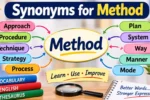
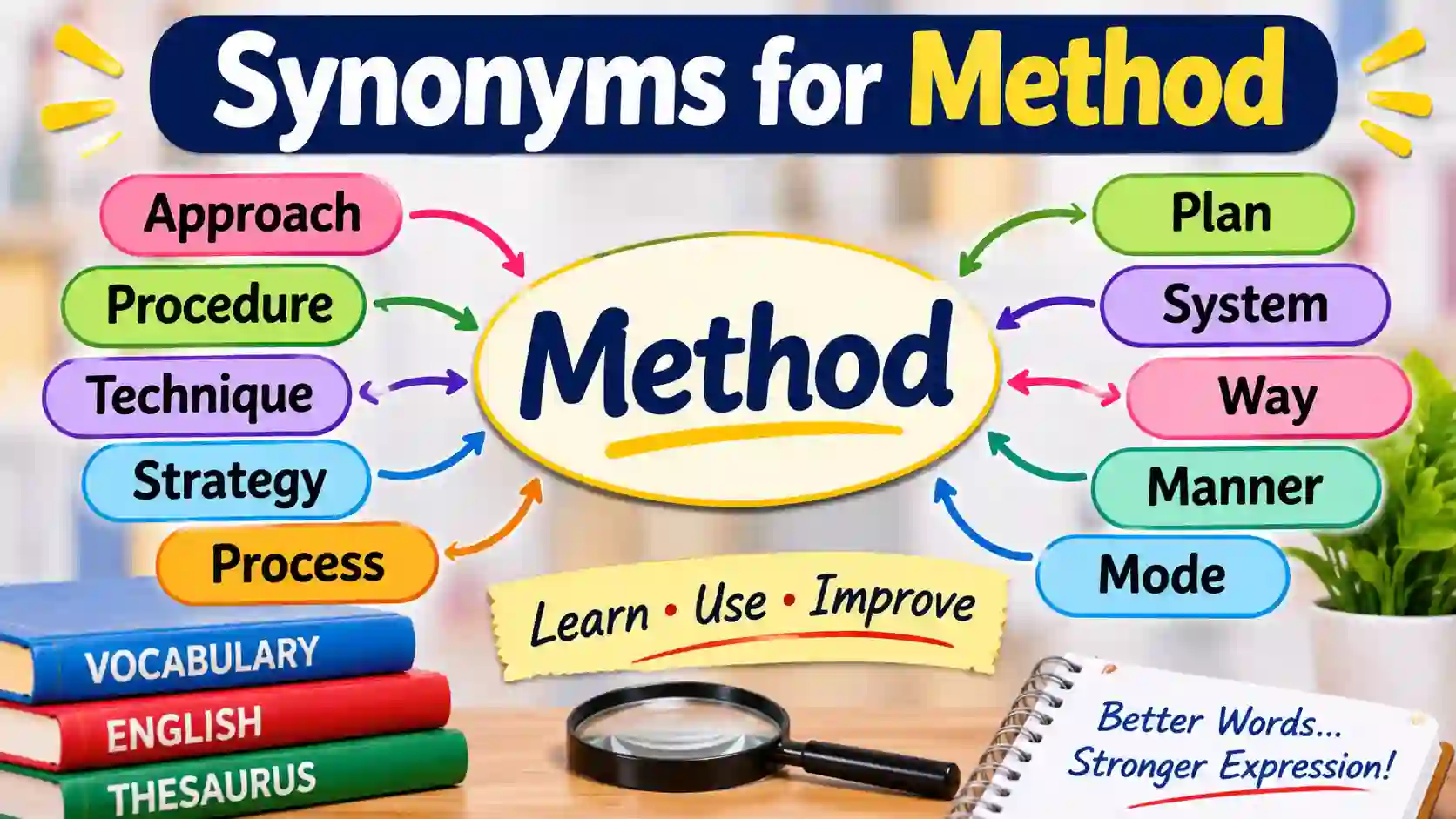
The best synonyms for method include approach, technique, procedure, process, system, way, means, manner, strategy, and plan. These words describe how someone completes a task or reaches a goal. However, each has a different use. Some describe practical skills, while others refer to organized steps, plans, or systems.
Do you often use the word method in your essays, emails, or everyday conversations? If so, learning a few alternatives can make your English clearer and more interesting.
A method is a particular way of doing something. For example, a student may use a new method to learn English, while a scientist may use a method to test an idea.
There are many synonyms for method, but choosing the right one matters. A technique describes a practical skill, a procedure explains specific steps, and an approach describes how someone handles a situation.
This guide explores 30 useful alternatives with simple meanings, original examples, pronunciation guidance, collocations, and practical writing tips. You will also learn which words work best in academic, professional, and everyday English.
Pronunciation of Method
- IPA: /ˈmeθ.əd/
- Pronunciation: METH-uhd
- Syllables: Two
- Word stress: First syllable
- Part of speech: Noun
- Plural: Methods
The American and British pronunciations are very similar.
Meaning and Part of Speech
Method is a countable noun. It describes a particular way of doing something, often with a system or plan.
Examples:
- The teacher introduced a new method.
- We tested three different methods.
- This method saves time and effort.
Word Family
| Word | Part of speech | Meaning |
| Method | Noun | A way of doing something |
| Methods | Plural noun | More than one way |
| Methodical | Adjective | Organized and careful |
| Methodically | Adverb | In an organized way |
| Methodology | Noun | A system or study of methods |
Remember: Method is not normally used as a verb. Methodical is its common adjective form.
Grammar: How to Use Method Correctly
These sentence patterns are common in everyday and professional English.
| Sentence pattern | Example |
| Method of + noun | A method of communication |
| Method of + verb-ing | A method of solving problems |
| Method for + noun | A method for data collection |
| Method for + verb-ing | A method for improving memory |
| Method to + verb | A method to reduce costs |
| Use a method | We use a simple method. |
| Apply a method | Apply the same method again. |
| Adopt a method | The school adopted a new method. |
Common Grammar Tip
Both “method of doing something” and “method for doing something” are correct.
- We need a better method of teaching English.
- We need a better method for teaching English.
The first pattern is especially common in formal writing, but both are natural.
30 Synonyms for Method: Quick Comparison Table
The following alternatives are grouped according to how closely they match the main meaning of method.
| Synonym | Main meaning | Register | Approx. CEFR |
| Approach | Way of handling something | Neutral | B2 |
| Technique | Practical skill or way | Neutral | B1 |
| Procedure | Established steps | Formal | B2 |
| Process | Connected stages | Neutral | B1 |
| System | Organized structure | Neutral | B1 |
| Way | General manner | Everyday | A1 |
| Means | Way to achieve a goal | Formal | B2 |
| Manner | Way an action is performed | Formal | B2 |
| Mode | Particular form or way | Academic | B2 |
| Strategy | Plan for achieving a goal | Business | B2 |
| Plan | Intended course of action | Neutral | A2 |
| Routine | Regular sequence of activities | Everyday | B1 |
| Practice | Established way of working | Academic | B1 |
| Style | Personal way of doing something | Neutral | B1 |
| Formula | Repeatable set of rules | Neutral | B1 |
| Course | Direction or sequence of action | Formal | B2 |
| Scheme | Organized plan or program | Formal | B2 |
| Program | Organized set of activities | Neutral | B1 |
| Mechanism | Way a system works | Technical | B2 |
| Framework | Supporting structure | Academic | B2 |
| Protocol | Official set of rules | Technical | C1 |
| Tactic | Specific planned action | Business | B2 |
| Pattern | Repeated arrangement | Neutral | B1 |
| Procedure of work | Set of working steps | Formal | B2 |
| Modus operandi | Usual way of operating | Formal | C1 |
| Fashion | Particular manner or way | Literary | B2 |
| Form | Particular type or arrangement | Neutral | B1 |
| Measure | Action taken to achieve an aim | Formal | B2 |
| Regimen | Planned routine or system | Formal | C1 |
| Methodology | System or study of methods | Academic | C1 |
CEFR labels are approximate editorial guidance for learners. A word’s difficulty can change according to its meaning and context. Some entries are contextual alternatives rather than exact replacements.
30 Detailed Synonyms for Method with Examples
1. Approach
Meaning: An approach is a way of handling a problem, task, or situation.
Examples:
- Our teacher used a friendly approach to explain difficult grammar rules.
- The company changed its approach to customer service.
Best used when: You describe how someone deals with a situation or challenge.
Tone: Neutral, academic, professional.
CEFR: B2 | Frequency: Very common.
Common collocations:
- Different approach
- Practical approach
- Systematic approach
When not to use: Avoid it when you need to describe a strict series of technical instructions.
2. Technique
Meaning: A technique is a particular skill or practical way of doing something.
Examples:
- The artist learned a new technique for painting realistic faces.
- This reading technique helps children understand difficult words.
Best used when: Discussing practical skills, specialized tasks, or learned actions.
Tone: Neutral, academic, professional.
CEFR: B1 | Frequency: Very common.
Common collocations:
- Teaching technique
- Writing technique
- Breathing technique
When not to use: Do not use it for a complete business plan.
3. Procedure
Meaning: A procedure is an established set of steps for completing a task.
Examples:
- The nurse explained the procedure before the medical test.
- Every employee must follow the correct procedure when handling customer information.
Best used when: Describing official, technical, medical, or workplace instructions.
Tone: Formal, business, technical.
CEFR: B2 | Frequency: Very common.
Common collocations:
- Standard procedure
- Safety procedure
- Application procedure
When not to use: Avoid it when discussing a personal preference rather than specific steps.
4. Process
Meaning: A process is a series of connected actions that produce a result.
Examples:
- Learning English is a gradual process that requires regular practice.
- The company improved its hiring process to save time.
Best used when: Describing stages of an activity or change.
Tone: Neutral, academic, business.
CEFR: B1 | Frequency: Very common.
Common collocations:
- Learning process
- Production process
- Decision-making process
When not to use: Do not use it for one isolated skill.
5. System
Meaning: A system is an organized group of parts or rules that work together.
Examples:
- The school introduced a new system for recording attendance.
- My study system helps me finish my lessons on time.
Best used when: Describing an organized structure with connected parts.
Tone: Neutral, technical, professional.
CEFR: B1 | Frequency: Very common.
Common collocations:
- Payment system
- Education system
- Management system
When not to use: Avoid it when discussing one small action without an organized structure.
6. Way
Meaning: A way is a general manner of doing something.
Examples:
- This is an easy way to remember new English words.
- She found a better way to organize her schoolwork.
Best used when: Speaking or writing in simple everyday English.
Tone: Neutral, informal, spoken.
CEFR: A1 | Frequency: Very common.
Common collocations:
- Best way
- Easy way
- Effective way
When not to use: Avoid using it repeatedly in formal writing when a more precise term would improve clarity.
7. Means
Meaning: Means describes a way or resource used to achieve something.
Examples:
- Education is an important means of improving people’s lives.
- The internet provides a convenient means of sharing information.
Best used when: Explaining how someone can reach a particular goal.
Tone: Formal, academic.
CEFR: B2 | Frequency: Common.
Common collocations:
- Means of communication
- Means of transport
- Effective means
When not to use: Avoid it when you need to explain a detailed sequence of steps.
8. Manner
Meaning: Manner describes how someone performs an action.
Examples:
- The manager explained the new rules in a polite manner.
- She completed the assignment in a careful manner.
Best used when: Describing the way an action is performed.
Tone: Formal, neutral, literary.
CEFR: B2 | Frequency: Common.
Common collocations:
- Professional manner
- Polite manner
- Particular manner
When not to use: Do not use it as a replacement for a technical procedure.
9. Mode
Meaning: A mode is a particular form or way in which something operates.
Examples:
- Online learning has become a popular mode of education.
- The company introduced a new mode of communication.
Best used when: Describing a form of operation, communication, or activity.
Tone: Formal, academic, technical.
CEFR: B2 | Frequency: Common.
Common collocations:
- Mode of transport
- Mode of communication
- Mode of learning
When not to use: Avoid it in simple conversations when “way” sounds more natural.
10. Strategy
Meaning: A strategy is a carefully planned way to achieve a goal.
Examples:
- The business developed a strategy to attract more customers.
- Her reading strategy helped her understand difficult books.
Best used when: Discussing long-term goals, planning, and competition.
Tone: Business, academic, professional.
CEFR: B2 | Frequency: Very common.
Common collocations:
- Marketing strategy
- Learning strategy
- Growth strategy
When not to use: Do not use it for a simple action that requires no planning.
11. Plan
Meaning: A plan is an arrangement of actions intended to achieve something.
Examples:
- The teacher created a plan for the weekly lessons.
- We need a clear plan to complete the project.
Best used when: Discussing what someone intends to do.
Tone: Neutral, everyday, business.
CEFR: A2 | Frequency: Very common.
Common collocations:
- Action plan
- Study plan
- Detailed plan
When not to use: A plan does not always explain the exact steps used to complete a task.
12. Routine
Meaning: A routine is a regular sequence of activities.
Examples:
- My morning routine includes reading and exercise.
- The team follows a daily routine to check its progress.
Best used when: Describing repeated activities.
Tone: Neutral, informal, professional.
CEFR: B1 | Frequency: Very common.
Common collocations:
- Daily routine
- Exercise routine
- Work routine
When not to use: Avoid it for a one-time activity that is not repeated.
13. Practice
Meaning: Practice can describe an accepted or established way of doing something.
Examples:
- Regular revision is a useful practice for students.
- The company follows safe working practices.
Best used when: Discussing established habits, professional standards, or accepted ways of working.
Tone: Academic, neutral, professional.
CEFR: B1 | Frequency: Very common.
Common collocations:
- Best practice
- Common practice
- Teaching practice
When not to use: Do not confuse this meaning with practice as an activity used to improve a skill.
14. Style
Meaning: Style is a particular way of doing or presenting something.
Examples:
- His teaching style makes difficult subjects interesting.
- The writer developed a unique style of storytelling.
Best used when: Discussing personal preferences, creative work, or presentation.
Tone: Neutral, literary, professional.
CEFR: B1 | Frequency: Very common.
Common collocations:
- Writing style
- Teaching style
- Working style
When not to use: Avoid it for a strict technical procedure.
15. Formula
Meaning: A formula is a fixed set of rules or steps used to produce a result.
Examples:
- The teacher shared a simple formula for solving the equation.
- There is no single formula for building a successful business.
Best used when: Describing a repeatable solution or established combination of steps.
Tone: Neutral, academic, technical.
CEFR: B1 | Frequency: Common.
Common collocations:
- Mathematical formula
- Winning formula
- Simple formula
When not to use: Avoid it when a task requires flexible decisions rather than a repeatable pattern.
16. Course
Meaning: A course can describe a direction or planned series of actions.
Examples:
- The manager chose a different course of action.
- The doctor discussed the best course of treatment with the patient.
Best used when: Discussing a planned direction or sequence of actions.
Tone: Formal, professional.
CEFR: B2 | Frequency: Common.
Common collocations:
- Course of action
- Course of treatment
- Chosen course
When not to use: Do not use it as a direct replacement for a small practical skill.
17. Scheme
Meaning: A scheme is an organized plan designed for a particular purpose.
Examples:
- The government introduced a scheme to support small businesses.
- The school created a reading scheme for young children.
Best used when: Discussing organized programs or planned arrangements.
Tone: Formal, especially common in British English.
CEFR: B2 | Frequency: Common.
Common collocations:
- Support scheme
- Payment scheme
- Training scheme
When not to use: In American English, scheme can suggest a dishonest plan. Consider a program when you mean a helpful organized activity.
18. Program
Meaning: A program is an organized set of activities designed to achieve a particular purpose.
Examples:
- The school started a program to improve reading skills.
- The company created a training program for new employees.
Best used when: Describing organized activities, training, or services.
Tone: Neutral, professional, academic.
CEFR: B1 | Frequency: Very common.
Common collocations:
- Training program
- Education program
- Support program
When not to use: A program is not always a method. It may include several methods and activities.
19. Mechanism
Meaning: A mechanism is a system or process through which something works.
Examples:
- The researchers studied the mechanism behind the chemical reaction.
- The website uses a simple mechanism to process payments.
Best used when: Explaining how a system produces a particular result.
Tone: Technical, scientific, academic.
CEFR: B2 | Frequency: Common.
Common collocations:
- Control mechanism
- Payment mechanism
- Defense mechanism
When not to use: Avoid it when discussing a person’s simple preference or everyday habit.
20. Framework
Meaning: A framework is a basic structure that guides how something is planned or completed.
Examples:
- The teacher developed a framework for evaluating student progress.
- We need a clear framework for our research project.
Best used when: Describing the structure that supports a larger activity.
Tone: Academic, formal, business.
CEFR: B2 | Frequency: Common.
Common collocations:
- Research framework
- Theoretical framework
- Decision-making framework
When not to use: A framework does not necessarily provide every practical instruction.
21. Protocol
Meaning: A protocol is an official set of rules or steps for a particular activity.
Examples:
- The laboratory follows a strict testing protocol.
- Employees must follow the company’s security protocol.
Best used when: Discussing official standards, technical work, and safety requirements.
Tone: Formal, technical, academic.
CEFR: C1 | Frequency: Common in specialist contexts.
Common collocations:
- Safety protocol
- Communication protocol
- Research protocol
When not to use: Avoid it for casual personal habits.
22. Tactic
Meaning: A tactic is a specific action used to achieve a smaller goal.
Examples:
- Offering free samples was an effective marketing tactic.
- The student used a memory tactic to learn difficult words.
Best used when: Describing one action within a larger strategy.
Tone: Business, neutral, professional.
CEFR: B2 | Frequency: Common.
Common collocations:
- Marketing tactic
- Negotiation tactic
- Practical tactic
When not to use: Avoid it when you mean an entire long-term plan.
23. Pattern
Meaning: A pattern is a repeated or recognizable way in which something happens.
Examples:
- The researcher noticed a pattern in the test results.
- Children often learn through repeated patterns of behavior.
Best used when: Describing repeated actions or recognizable structures.
Tone: Neutral, academic.
CEFR: B1 | Frequency: Very common.
Common collocations:
- Behavior pattern
- Learning pattern
- Repeated pattern
When not to use: Do not use it when you mean a deliberately planned procedure.
24. Modus Operandi
Meaning: Modus operandi describes someone’s usual way of working or operating.
Examples:
- Careful research is the journalist’s usual modus operandi.
- Investigators studied the criminal’s modus operandi.
Best used when: Describing a characteristic or repeated operating pattern.
Tone: Formal, technical, literary.
CEFR: C1 | Frequency: Uncommon.
Common collocations:
- Usual modus operandi
- Criminal modus operandi
- Established modus operandi
When not to use: Avoid it in everyday conversation when “usual approach” is clearer.
25. Fashion
Meaning: Fashion can mean a particular way or manner of doing something.
Examples:
- The team completed the project in an organized fashion.
- The teacher presented the lesson in a creative fashion.
Best used when: Describing the manner in which an action is performed.
Tone: Formal, literary.
CEFR: B2 | Frequency: Less common in this sense.
Common collocations:
- Organized fashion
- Similar fashion
- Particular fashion
When not to use: Avoid it when discussing clothing trends or when a simpler word such as way is more natural.
26. Form
Meaning: A form is a particular type or arrangement of something.
Examples:
- Group discussion is one form of collaborative learning.
- The school introduced a new form of assessment.
Best used when: Describing a type or structure rather than exact steps.
Tone: Neutral, academic.
CEFR: B1 | Frequency: Very common.
Common collocations:
- Form of communication
- Form of assessment
- Alternative form
When not to use: Do not use it when you need to describe the detailed process of completing a task.
27. Measure
Meaning: A measure is an action taken to achieve a particular result or deal with a problem.
Examples:
- The company introduced new measures to improve workplace safety.
- Regular checks are an effective measure for reducing errors.
Best used when: Discussing practical actions taken to achieve or protect something.
Tone: Formal, professional.
CEFR: B2 | Frequency: Common.
Common collocations:
- Safety measure
- Preventive measure
- Security measure
When not to use: Avoid it when you mean a complete technique or sequence of instructions.
28. Regimen
Meaning: A regimen is a planned routine of activities, treatments, or habits.
Examples:
- The athlete follows a strict training regimen.
- Her daily study regimen includes reading and revision.
Best used when: Describing an organized and repeated routine.
Tone: Formal, medical, professional.
CEFR: C1 | Frequency: Less common.
Common collocations:
- Training regimen
- Exercise regimen
- Treatment regimen
When not to use: Do not use it for a single action or an ordinary one-time task.
29. Methodology
Meaning: Methodology is the study, explanation, or organized system of methods used in a particular field or research project.
Examples:
- The researcher explained the methodology behind the experiment.
- The university reviewed the project’s research methodology.
Best used when: Discussing academic research and the reasoning behind selected methods.
Tone: Academic, formal, professional.
CEFR: C1 | Frequency: Common in academic writing.
Common collocations:
- Research methodology
- Scientific methodology
- Qualitative methodology
When not to use: Do not use it when you simply mean one method or technique.
30. Custom
Meaning: A custom is an accepted or traditional way of behaving or doing something.
Examples:
- It is a local custom to welcome guests with tea.
- The company follows a long-standing custom of celebrating employee achievements.
Best used when: Describing traditions or established social practices.
Tone: Neutral, formal, cultural.
CEFR: B2 | Frequency: Common.
Common collocations:
- Local custom
- Cultural custom
- Traditional custom
When not to use: Avoid it when describing a newly created technical process.
Strongest Synonyms for Method
These alternatives are the closest general matches for the meaning of method:
- Approach
- Technique
- Procedure
- Process
- System
- Way
- Means
- Manner
- Mode
They work well in educational writing, professional communication, and general explanations, depending on context.
Strong Contextual Alternatives
These words can replace method in particular situations:
- Strategy
- Plan
- Routine
- Practice
- Style
- Formula
- Course
- Scheme
- Program
- Mechanism
- Framework
- Protocol
- Tactic
- Pattern
- Modus operandi
- Fashion
- Form
- Measure
- Regimen
- Methodology
- Custom
Do not treat these as interchangeable. Each describes a different aspect of how something is done.
Choose the Right Synonym: Side by Side Comparisons
Understanding the differences between similar words is more useful than memorizing long lists.
Method vs. Approach vs. Technique
| Word | Main difference | Example |
| Method | A particular way of doing something | We tested a new method. |
| Approach | A way of handling a situation | We took a different approach. |
| Technique | A specific practical skill | She learned a new technique. |
Example in context:
A teacher chooses a teaching method, takes a friendly approach, and uses different teaching techniques.
Method vs. Process vs. Procedure
| Word | Main difference | Example |
| Method | A chosen way of doing something | This method saves time. |
| Process | Connected stages of an activity | The process takes two days. |
| Procedure | Established steps to follow | Follow the safety procedure. |
Example in context:
A company uses a method to improve its hiring process and follows a procedure to interview applicants.
Method vs. Strategy vs. Tactic
| Word | Main difference | Example |
| Method | Way of completing a task | We changed our method. |
| Strategy | Overall plan for a goal | Our strategy focuses on growth. |
| Tactic | One specific action | This tactic attracts customers. |
Example in context:
A business develops a strategy, chooses a method, and uses individual tactics to reach customers.
Method vs. System vs. Framework
| Word | Main difference | Example |
| Method | Way of doing something | We use this method daily. |
| System | Connected parts working together | The system tracks progress. |
| Framework | Structure that guides an activity | The framework guides research. |
Example in context:
A research framework guides the project, while the researcher selects specific methods to collect data.
Commonly Confused Words
| Word | Difference | Example |
| Method vs. Methodology | A method is one way of doing something; methodology explains the system or reasoning behind methods. | The methodology explains why we selected this method. |
| Method vs. Process | A method is a chosen way; a process contains connected stages. | The method improved the process. |
| Method vs. Technique | A technique is often a specific practical skill. | She learned a painting technique. |
| Method vs. Strategy | A strategy is a broader plan for achieving a goal. | Our strategy includes three methods. |
| Method vs. Procedure | A procedure provides established steps to follow. | The procedure explains each stage. |
Common Mistakes When Using Synonyms for Method
Mistake 1: Using Methodology for One Simple Action
Mistake: My methodology for opening the door is simple.
Correction: My method for opening the door is simple.
Explanation: Methodology usually refers to a system or study of methods, especially in research.
Mistake 2: Confusing Strategy with Technique
Mistake: Her strategy for holding a pencil was excellent.
Correction: Her technique for holding a pencil was excellent.
Explanation: Technique describes a practical skill. Strategy usually describes a plan for achieving a goal.
Mistake 3: Using Routine for a One-Time Action
Mistake: We followed a new routine to repair the machine once.
Correction: We followed a new procedure to repair the machine.
Explanation: A routine normally refers to activities repeated regularly.
Mistake 4: Using Manner for Technical Instructions
Mistake: Follow the correct manner to install the software.
Correction: Follow the correct procedure to install the software.
Explanation: Procedure is more suitable when someone must follow specific instructions.
Mistake 5: Treating Every Synonym as Identical
Mistake: Habit, strategy, and process always mean the same as method.
Correction: Choose each word according to its meaning and context.
Explanation: Related words often share a general idea but have different uses.
American vs. British English: Method
The word method has the same spelling and basic meaning in American and British English.
| Feature | American English | British English |
| Spelling | Method | Method |
| Pronunciation | /ˈmeθ.əd/ | /ˈmeθ.əd/ |
| Plural | Methods | Methods |
| Main meaning | A way of doing something | A way of doing something |
There is no important spelling difference between the two varieties.
However, some related words differ:
| American English | British English |
| Program | Programme |
| Organization | Organisation |
| Analyze | Analyse |
| Transportation | Transport |
| Vacation | Holiday |
One useful difference is the word scheme. It commonly describes an organized plan or program in British English. In American English, it can also suggest a dishonest plan.
Word Origin and Etymology of Method
The word method has roots in ancient Greek.
| Feature | Information |
| Greek origin | Methodos |
| Latin form | Methodus |
| English development | Late Middle English |
| First recorded English use | Around 1375–1425 |
| Original idea | A systematic course or way |
The Greek word combines meta (after or along) and hodos (way or road).
The word entered English through Latin and developed its modern meaning of an organized way of doing something.
The historical date is approximate because dictionary sources use slightly different descriptions of the word’s development.
Frequency and Register: Which Words Should You Learn First?
Knowing how often people use a word can help you choose natural vocabulary.
| Frequency guidance | Examples |
| Very common | Way, method, approach, process, system |
| Common | Technique, procedure, strategy, plan, routine |
| Less common | Regimen, fashion, modus operandi |
| Specialist or academic | Methodology, protocol, framework |
Register Guide
Everyday English: Way, plan, routine, habit.
Academic English: Methodology, procedure, framework, process.
Business English: Strategy, approach, operation, tactic.
Technical English: Protocol, mechanism, technique.
Literary English: Manner, mode, fashion.
These are practical learning categories, not numerical corpus rankings.
Related Vocabulary: Antonyms and Word Family
Antonyms of Method
There is no single perfect opposite of method in every context. These words can describe a lack of order or planning.
| Word | Meaning |
| Disorganization | Lack of proper arrangement |
| Chaos | Complete confusion or disorder |
| Disorder | Lack of order |
| Confusion | Lack of clear understanding |
| Randomness | Lack of a planned pattern |
| Improvisation | Acting without a fixed plan |
Related Expressions
- Trial and error: Finding an answer by trying different options.
- Step by step: Doing something in a clear sequence.
- By design: Following a planned arrangement.
- A means to an end: Something used to reach a goal.
- Standard operating procedure: Official instructions for completing a task.
- Best practice: A proven or accepted way of doing something.
Word Family
| Word | Part of speech | Example |
| Method | Noun | This method works well. |
| Methods | Plural noun | Different methods produce different results. |
| Methodical | Adjective | She is methodical in her work. |
| Methodically | Adverb | He checked every document methodically. |
| Methodology | Noun | The methodology explains the research design. |
Writing Tips: How to Use Synonyms for Method Naturally
Different alternatives can make your writing more precise. However, you should not replace every use of method with another word.
1. Academic Essays
Use approach, procedure, methodology, and process.
Original: The researcher used a new method to collect information.
Improved: The researcher adopted a new approach to collecting information.
2. Professional Emails
Use procedure, strategy, and process when discussing workplace tasks.
Original: Please explain the method for handling customer complaints.
Improved: Please explain the procedure for handling customer complaints.
3. Blog Posts
Use approach, technique, and way to keep explanations friendly.
Original: This method helps beginners learn English.
Improved: This approach helps beginners learn English.
4. Stories
Use manner, style, and way when describing characters and actions.
Original: He had a strange method of solving problems.
Improved: He had an unusual way of solving problems.
5. Social Media
Use simple words such as way and technique.
Original: Try this method to improve your writing.
Improved: Try this simple technique to improve your writing.
6. Business Communication
Use strategy, framework, and procedure when explaining business activities.
Original: We need a better method to attract customers.
Improved: We need a stronger marketing strategy to attract customers.
7. Daily Conversations
Use common words that people understand easily.
Original: What method do you use to remember names?
Improved: What’s your way of remembering names?
Writing Tip: Do not replace a word just to avoid repetition. Use a synonym only when it preserves the original meaning and makes the sentence clearer.
Frequently Asked Questions About Synonyms for Method
1. What are the best synonyms for method?
The best synonyms for method include approach, technique, procedure, process, system, and way. These words describe how someone completes an activity or solves a problem. Approach is useful for handling situations, while technique is better for practical skills and procedure describes specific steps.
2. What is a more professional word for method?
Professional alternatives include procedure, approach, strategy, framework, and methodology. The correct choice depends on your subject. Businesses often use strategy when discussing goals, while researchers use methodology when explaining the design and reasoning behind their research.
3. What is a simple word for method?
The simplest alternative is way. It is easy to understand and works in everyday conversations. For example, instead of saying, “This is an effective method of learning,” you can say, “This is an effective way to learn.” Both sentences communicate a similar idea.
4. What is the difference between method and technique?
A method is a general way of completing a task, while a technique is usually a specific practical skill or action. For example, a teacher may use a teaching method that includes several techniques, such as group discussions, demonstrations, and practice exercises.
5. Is methodology a synonym for method?
Methodology is related to method, but the two words have different meanings. A method is a particular way of doing something. Methodology refers to the study, explanation, or organized system of methods used in a field or research project.
6. What are some academic synonyms for method?
Academic alternatives include methodology, procedure, approach, framework, technique, and process. Researchers use these words to explain how they collect information, conduct experiments, and analyze results. However, each term has a specific meaning, so choose one that accurately describes the research activity.
7. What is the opposite of this method?
There is no single direct antonym that works in every context. However, words such as disorganization, disorder, chaos, confusion, and randomness can describe situations without a clear or organized method. The best opposite depends on whether you mean a lack of planning, order, or structure.
8. Can I use method and approach interchangeably?
Sometimes, yes. Both words can describe a way of doing something. However, approach usually focuses on how someone handles a situation, while method often suggests a more organized or established way of completing a task.
Vocabulary Quiz: Test Your Knowledge
Choose the correct answer for each question.
- Which word describes a set of official steps for completing a task?
A. Habit
B. Procedure
C. Style
D. Pattern - Which synonym describes a long-term plan for achieving a goal?
A. Strategy
B. Manner
C. Routine
D. Custom - Which word is best for a specific practical skill?
A. Framework
B. Technique
C. Course
D. Order - Which word describes something a person does regularly?
A. Protocol
B. Mechanism
C. Routine
D. Methodology - Which word is most suitable for explaining the complete academic system behind research methods?
A. Habit
B. Way
C. Recipe
D. Methodology
Answer Key
- B. Procedure
- A. Strategy
- B. Technique
- C. Routine
- D. Methodology
Mini Practice Exercises
Exercise 1: Fill in the Blanks
Choose from: approach, procedure, strategy, routine, technique.
- The company developed a marketing ______ to reach new customers.
- Please follow the safety ______ before using the machine.
- Reading every morning is part of my daily ______.
- The artist learned a new painting ______.
- We need a different ______ to solve this problem.
Exercise 2: Rewrite the Sentences
Replace the bold word with a suitable synonym.
- This method makes learning easier.
- The teacher introduced a new method of teaching.
- The company changed its method of attracting customers.
Exercise 3: Match the Words
| Word | Meaning |
| 1. Strategy | A. Repeated activity |
| 2. Routine | B. Practical skill |
| 3. Technique | C. Planned way to reach a goal |
| 4. Procedure | D. Set of steps |
Practice Answer Key
Exercise 1:
- Strategy
- Procedure
- Routine
- Technique
- Approach
2:
Possible answers:
- Way
- Approach
- Strategy
3:
1-C, 2-A, 3-B, 4-D.
Conclusion
Learning synonyms for methods helps you express ideas clearly and avoid repeating the same words. Alternatives such as approach, technique, process, strategy, and procedure make your writing more accurate and natural.
Remember that every synonym has its own meaning and purpose. Practice these words in emails, essays, schoolwork, and everyday conversations. The more you use them correctly, the stronger your English vocabulary will become.
References
- Cambridge Dictionary: https://dictionary.cambridge.org/dictionary/english/method
- Cambridge Thesaurus: https://dictionary.cambridge.org/us/thesaurus/method
- Merriam-Webster: https://www.merriam-webster.com/dictionary/method
- Collins Dictionary: https://www.collinsdictionary.com/dictionary/english/method
- Thesaurus.com: https://www.thesaurus.com/browse/method

Synonorm is a trusted English vocabulary resource created to help readers find the right words and understand the differences between similar terms. We provide clear explanations of synonyms, meanings, examples, usage, and alternatives. Our content makes vocabulary easier to learn and apply in everyday, academic, and professional English. Synonorm is designed for students, writers, ESL learners, professionals, and anyone who wants to improve their English vocabulary and communicate more clearly.