Quick Answer: What Are Synonyms for Gossip?
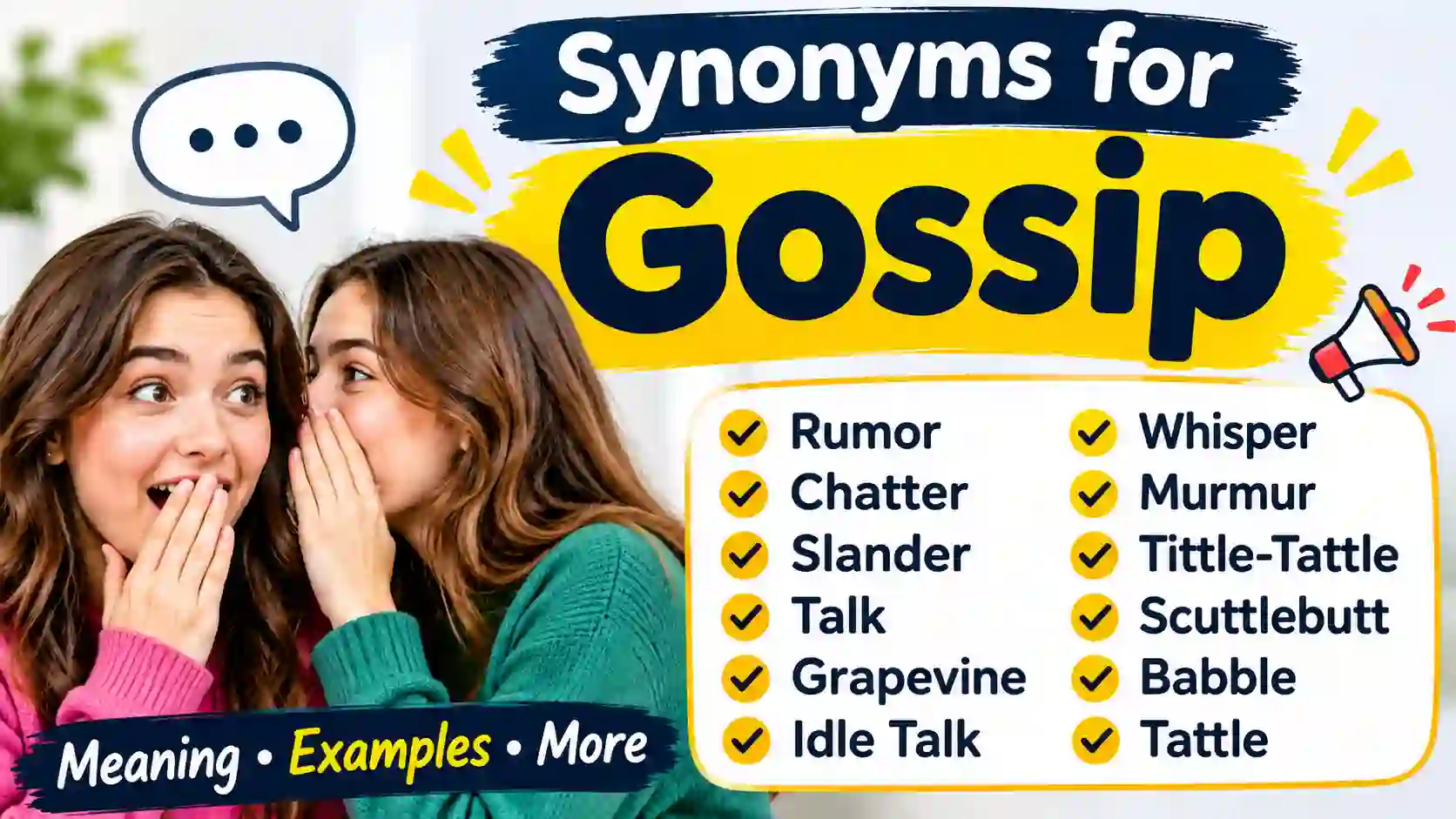
Common synonyms for gossip include rumor, hearsay, idle talk, tittle-tattle, backbiting, talebearing, scandal, dirt, dish, and scuttlebutt. These words describe different forms of informal talk, personal stories, or unconfirmed information. Some have negative meanings, while others describe harmless conversation. The best choice depends on the situation and the message you want to express.
Do you enjoy hearing interesting stories about people, or have you ever heard someone spreading an unconfirmed story about a friend? English speakers use the word gossip for many kinds of conversations about other people’s private lives.
However, repeating a rumor is not the same as having friendly chitchat. Similarly, backbiting involves unkind comments, while hearsay describes information received from another person.
Learning synonyms for gossip helps you explain these situations with greater accuracy. It is useful for students, teachers, bloggers, writers, and professionals who want to improve their English vocabulary.
In this guide, you will discover 30 alternatives, their meanings, examples, pronunciation, common expressions, and differences. You will also learn which words work best in everyday conversations, academic writing, and professional communication.
Pronunciation of Gossip
- IPA (American): /ˈɡɑː.sɪp/
- IPA (British): /ˈɡɒs.ɪp/
- Pronunciation: GAH-sip (American), GOS-ip (British)
- Syllables: Two
- Word stress: First syllable
Part of Speech
The word gossip functions mainly as a noun and a verb.
| Part of speech | Meaning | Example |
| Noun | Informal talk about other people’s private lives | Office gossip spreads quickly. |
| Noun (person) | Someone who enjoys sharing personal stories | She is a terrible gossip. |
| Verb | To talk about other people’s affairs | They gossip about their neighbors. |
Related Word Forms
- Gossiped: Past tense of gossip.
- Gossiping: Talking about other people’s affairs.
- Gossipy: Involving or containing gossip.
- Gossiper: A person who spreads gossip.
- Gossipmonger: Someone who spreads rumors or personal stories.
Grammar: How to Use Gossip in Sentences
Gossip is usually an uncountable noun when it refers to information or conversation in general.
Common sentence patterns include:
| Pattern | Example |
| Gossip about someone | They spread gossip about their teacher. |
| Gossip with someone | I gossiped with my cousin. |
| Spread gossip | Do not spread gossip at work. |
| A piece of gossip | She shared a piece of gossip. |
| Gossip that something happened | There was gossip that the business would close. |
Common grammar mistakes:
- Incorrect: She told me gossip.
- Correct: She told me a piece of gossip.
- Incorrect: They gossip about their neighbors.
- Correct: They are gossiping about their neighbors.
Remember that gossip is normally uncountable when discussing information generally.
30 Synonyms for Gossip with Examples and Explanations (2026)
The following words are grouped by meaning. Some are close synonyms, while others describe a particular type of gossip or a related form of conversation.
Strongest and Closest Synonyms
1. Rumor (Rumour)
Meaning: A story or claim that people share without knowing whether it is true.
Examples:
- A rumor about the new principal spread throughout the school.
- The company denied the rumor about its possible closure.
- Best used when: Discussing unconfirmed information.
- Tone: Neutral or negative.
- Register: Everyday, news, business.
- CEFR: B1 (approximate).
- Frequency: Very common.
- Collocations: False rumor, spread a rumor, unfounded rumor.
- When not to use: Do not use it for information that has already been confirmed.
2. Hearsay
Meaning: Information received from another person rather than learned directly.
Examples:
- The manager refused to make a decision based on hearsay.
- Most of the story was nothing more than hearsay.
- Best used when: Questioning the reliability of second-hand information.
- Tone: Neutral or skeptical.
- Register: Formal, academic, legal.
- CEFR: C1 (approximate).
- Frequency: Common.
- Collocations: Mere hearsay, hearsay evidence, based on hearsay.
- When not to use: Avoid it when describing information you personally witnessed.
3. Idle Talk
Meaning: Conversation that has little purpose or useful information.
Examples:
- The meeting turned into idle talk about coworkers.
- She preferred meaningful discussions over idle talk.
- Best used when: Describing unnecessary or unproductive conversation.
- Tone: Mildly negative.
- Register: Neutral, literary.
- CEFR: B2 (approximate).
- Frequency: Common.
- Collocations: Idle gossip, endless idle talk, engage in idle talk.
- When not to use: Do not use it for every friendly conversation.
4. Tittle Tattle
Meaning: Unimportant or silly conversation about other people’s personal lives.
Examples:
- The neighbors spent the afternoon exchanging tittle-tattle.
- She had no interest in the office title-tattle.
- Best used when: Referring to trivial personal stories.
- Tone: Disapproving or playful.
- Register: Informal, British English.
- CEFR: C2 (approximate).
- Frequency: Uncommon.
- Collocations: Office tittle-tattle, silly tittle-tattle.
- When not to use: Avoid it in formal business reports.
5. Backbiting
Meaning: Saying unkind things about someone when that person is absent.
Examples:
- Constant backbiting damaged their friendship.
- The employees became tired of the backbiting in their department.
- Best used when: Describing unfair personal criticism.
- Tone: Strongly negative.
- Register: Social, literary, everyday.
- CEFR: C1 (approximate).
- Frequency: Common.
- Collocations: Workplace backbiting, constant backbiting, malicious backbiting.
- When not to use: Do not use it for harmless conversation.
6. Talebearing
Meaning: The act of carrying private stories or information from one person to another.
Examples:
- Her talebearing caused tension between the neighbors.
- The teacher warned the students against talebearing.
- Best used when: Describing someone who repeatedly spreads private information.
- Tone: Negative.
- Register: Literary, formal.
- CEFR: C2 (approximate).
- Frequency: Rare.
- Collocations: Habitual talebearing, malicious talebearing.
- When not to use: Avoid it in everyday conversations because it sounds old-fashioned.
7. Scandal
Meaning: An event or situation that causes public shock or disapproval.
Examples:
- The political scandal attracted national attention.
- The celebrity’s actions became a public scandal.
- Best used when: Gossip concerns controversial behavior or an embarrassing public event.
- Tone: Negative, dramatic.
- Register: Journalism, formal, everyday.
- CEFR: B2 (approximate).
- Frequency: Very common.
- Collocations: Political scandal, public scandal, financial scandal.
- When not to use: Do not use it for ordinary friendly conversation.
8. Dirt
Meaning: Informal information about someone’s embarrassing or private behavior.
Examples:
- The reporter wanted to find dirt on the politician.
- Her friends asked whether she knew any dirt about the new neighbors.
- Best used when: Talking casually about embarrassing information.
- Tone: Negative, playful, sometimes sensational.
- Register: Informal, slang.
- CEFR: B2 (approximate).
- Frequency: Common.
- Collocations: Dig up dirt, dirt on someone, dish the dirt.
- When not to use: Avoid it in formal business communication.
9. Dish
Meaning: Informal slang for interesting personal information or gossip.
Examples:
- Come over tonight and give me the dish about your trip.
- The entertainment show shares celebrity dishes every week.
- Best used when: Discussing entertaining personal stories.
- Tone: Playful.
- Register: Informal, spoken English.
- CEFR: C1 (approximate).
- Frequency: Common.
- Collocations: Dish the dirt, celebrity dish, juicy dish.
- When not to use: Avoid it in formal writing.
10. Scuttlebutt
Meaning: Informal information or rumors circulating among a group of people.
Examples:
- The office scuttlebutt suggested that a new manager was coming.
- I heard some interesting scuttlebutt about the project.
- Best used when: Referring to unofficial workplace or community information.
- Tone: Informal, sometimes humorous.
- Register: American English, workplace slang.
- CEFR: C2 (approximate).
- Frequency: Uncommon.
- Collocations: Office scuttlebutt, military scuttlebutt, local scuttlebutt.
- When not to use: Avoid it in formal academic writing.
Strong Synonyms and Related Expressions
11. Backstabbing
Meaning: Betraying someone, often by secretly acting against them or damaging their reputation.
Examples:
- His backstabbing ruined their professional relationship.
- She was tired of the backstabbing in the department.
- Best used when: Gossip involves betrayal or deliberate disloyalty.
- Tone: Strongly negative.
- Register: Informal, business, social.
- CEFR: B2 (approximate).
- Frequency: Common.
- Collocations: Office backstabbing, political backstabbing, backstabbing behavior.
- When not to use: Do not use it for ordinary rumors.
12. Innuendo
Meaning: An indirect remark that suggests something unpleasant or embarrassing.
Examples:
- His speech contained an unpleasant innuendo about her past.
- She disliked the constant innuendo in their conversations.
- Best used when: Someone hints at private information without stating it directly.
- Tone: Negative or suggestive.
- Register: Formal, literary.
- CEFR: C1 (approximate).
- Frequency: Common.
- Collocations: Sexual innuendo, malicious innuendo, subtle innuendo.
- When not to use: Do not use it for a straightforward rumor.
13. Slander
Meaning: A false spoken statement that harms someone’s reputation.
Examples:
- The business owner accused the speaker of slander.
- The false statement led to a dispute over alleged slander.
- Best used when: Discussing harmful false spoken claims.
- Tone: Strongly negative.
- Register: Legal, formal.
- CEFR: C1 (approximate).
- Frequency: Common.
- Collocations: Malicious slander, accusation of slander, spread slander.
- When not to use: Do not use it for every negative conversation. Legal requirements vary by jurisdiction.
14. Calumny
Meaning: A false and harmful statement intended to damage someone’s reputation.
Examples:
- The writer rejected the calumny published about her.
- His reputation suffered because of repeated calumny.
- Best used when: Describing serious and malicious false accusations.
- Tone: Strongly negative.
- Register: Literary, formal.
- CEFR: C2 (approximate).
- Frequency: Rare.
- Collocations: Malicious calumny, false calumny, spread calumny.
- When not to use: Avoid it in everyday conversation.
15. Defamation
Meaning: A false statement that harms someone’s reputation.
Examples:
- The company considered legal action over the alleged defamation.
- The article raised concerns about possible defamation.
- Best used when: Discussing reputation-damaging claims in a legal or professional context.
- Tone: Strongly negative.
- Register: Legal, formal.
- CEFR: C1 (approximate).
- Frequency: Common.
- Collocations: Defamation claim, defamation lawsuit, alleged defamation.
- When not to use: Do not use it as a general replacement for casual gossip.
16. Tattle
Meaning: To tell someone about another person’s behavior, often to get that person into trouble.
Examples:
- The children continued to tattle on each other.
- He threatened to tattle to the teacher about the incident.
- Best used when: Describing petty reporting, especially among children.
- Tone: Negative.
- Register: Informal, American English.
- CEFR: B2 (approximate).
- Frequency: Common.
- Collocations: Tattle on someone, stop tattling, childish tattle.
- When not to use: Do not confuse reporting serious wrongdoing with childish tattling.
17. Rumormongering
Meaning: The repeated spreading of rumors, often to create confusion or trouble.
Examples:
- The supervisor warned employees against workplace rumormongering.
- Online rumormongering created unnecessary fear.
- Best used when: Describing someone who repeatedly spreads unverified stories.
- Tone: Negative.
- Register: Formal, journalism, social commentary.
- CEFR: C1 (approximate).
- Frequency: Uncommon.
- Collocations: Political rumormongering, online rumormongering, stop rumormongering.
- When not to use: Do not use it for one casual conversation.
18. Newsmongering
Meaning: The practice of spreading news or sensational stories, sometimes without regard for accuracy.
Examples:
- The editor criticized the publication for excessive newsmongering.
- The campaign became a target of political newsmongering.
- Best used when: Describing the spread of sensational or attention-seeking information.
- Tone: Negative.
- Register: Formal, journalism.
- CEFR: C2 (approximate).
- Frequency: Rare.
- Collocations: Political newsmongering, sensational newsmongering.
- When not to use: Do not use it for responsible reporting of verified news.
19. Gossipmonger
Meaning: A person who regularly spreads gossip or personal stories.
Examples:
- Nobody trusted the office gossipmonger with private information.
- The gossipmonger quickly shared the celebrity’s private story.
- Best used when: Describing a person who spreads gossip.
- Tone: Negative.
- Register: Informal, literary.
- CEFR: C2 (approximate).
- Frequency: Uncommon.
- Collocations: Office gossipmonger, habitual gossipmonger.
- When not to use: Avoid it as a neutral label for someone who enjoys friendly conversation.
20. Scandalmongering
Meaning: The practice of spreading stories about scandals or controversial behavior.
Examples:
- The newspaper was criticized for scandalmongering.
- Constant scandalmongering created distrust among employees.
- Best used when: Describing repeated attempts to spread scandalous stories.
- Tone: Strongly negative.
- Register: Formal, journalism.
- CEFR: C2 (approximate).
- Frequency: Uncommon.
- Collocations: Political scandalmongering, media scandalmongering.
- When not to use: Avoid it for harmless conversations.
Related Words for Informal Conversation
21. Chatter
Meaning: Quick, informal, or continuous conversation.
Examples:
- Excited chatter filled the classroom.
- Online chatter focused on the actor’s latest announcement.
- Best used when: Describing informal discussion or a lot of talking.
- Tone: Neutral.
- Register: Spoken, everyday, media.
- CEFR: B1 (approximate).
- Frequency: Very common.
- Collocations: Office chatter, online chatter, general chatter.
- When not to use: Do not use it when you specifically mean a false rumor.
22. Chitchat (Chit/chat)
Meaning: Friendly and informal conversation about everyday subjects.
Examples:
- We enjoyed some chitchat before the meeting.
- A little chitchat helped everyone feel comfortable.
- Best used when: Describing relaxed social conversation.
- Tone: Friendly.
- Register: Informal, spoken English.
- CEFR: B1 (approximate).
- Frequency: Very common.
- Collocations: Casual chitchat, friendly chitchat, office chitchat.
- When not to use: Do not use it for harmful rumors.
23. Small Talk
Meaning: Polite conversation about simple, everyday subjects.
Examples:
- We made small talk while waiting for the bus.
- Small talk helped break the silence.
- Best used when: Describing polite conversation between people.
- Tone: Friendly, neutral.
- Register: Business, social, spoken English.
- CEFR: A2 (approximate).
- Frequency: Very common.
- Collocations: Make small talk, polite small talk, awkward small talk.
- When not to use: It is not the right word for spreading private information.
24. Whispering
Meaning: Speaking very quietly, sometimes to share private information.
Examples:
- Whispering started when the guest entered the room.
- The students were whispering about the surprise party.
- Best used when: Describing quiet conversations that may involve secrets.
- Tone: Neutral or suspicious.
- Register: Everyday, literary.
- CEFR: A2 (approximate).
- Frequency: Very common.
- Collocations: Quiet whispering, whispered rumors, whispering campaign.
- When not to use: Whispering alone does not mean gossip.
25. Buzz
Meaning: Excited talk or discussion about a person, event, or topic.
Examples:
- There was a lot of buzz about the new restaurant.
- The singer created online buzz after the announcement.
- Best used when: Describing widespread interest or discussion.
- Tone: Usually positive or neutral.
- Register: Marketing, media, everyday.
- CEFR: B2 (approximate).
- Frequency: Very common.
- Collocations: Online buzz, media buzz, generate buzz.
- When not to use: Do not use it when you specifically mean a false or harmful claim.
26. Grapevine
Meaning: An informal way of receiving information through other people.
Examples:
- I heard through the grapevine that she had changed jobs.
- News of the promotion spread through the office grapevine.
- Best used when: Explaining how unofficial information travels.
- Tone: Neutral, conversational.
- Register: Informal, business.
- CEFR: B2 (approximate).
- Frequency: Very common.
- Collocations: Hear through the grapevine, office grapevine, information grapevine.
- When not to use: It describes the information network, not necessarily the gossip itself.
27. Babble
Meaning: Fast or unclear talking that may be difficult to understand.
Examples:
- The excited children began to babble about their weekend.
- He babbled about everyone else’s personal business.
- Best used when: Describing excessive or confused speech.
- Tone: Negative or humorous.
- Register: Informal.
- CEFR: B2 (approximate).
- Frequency: Common.
- Collocations: Nervous babble, endless babble, babble on.
- When not to use: It does not automatically mean talking behind someone’s back.
28. Prattle
Meaning: Talking for a long time about things that are not important.
Examples:
- They spent hours prattling about neighborhood problems.
- I could not concentrate because of the constant prattle.
- Best used when: Describing unimportant or excessive conversation.
- Tone: Disapproving.
- Register: Literary, informal.
- CEFR: C1 (approximate).
- Frequency: Uncommon.
- Collocations: Idle prattle, endless prattle, prattle on.
- When not to use: Avoid it when describing a serious discussion.
29. Speculation
Meaning: An idea or guess about something without enough confirmed information.
Examples:
- Speculation about the manager’s departure continued all week.
- Online discussions were full of speculation about their relationship.
- Best used when: People are guessing about an uncertain situation.
- Tone: Neutral.
- Register: Academic, formal, journalism.
- CEFR: C1 (approximate).
- Frequency: Common.
- Collocations: Public speculation, widespread speculation, speculation about.
- When not to use: Do not use it for confirmed facts.
30. Chatterbox
Meaning: A person who talks a lot, sometimes about other people’s affairs.
Examples:
- Everyone knows that Jake is a real chatterbox.
- The little chatterbox kept telling us stories about her classmates.
- Best used when: Describing someone who talks frequently.
- Tone: Playful or mildly critical.
- Register: Informal, spoken English.
- CEFR: B2 (approximate).
- Frequency: Common.
- Collocations: Little chatterbox, complete chatterbox, talkative chatterbox.
- When not to use: A chatterbox is not necessarily a person who spreads harmful gossip.
Synonym Categories: Which Words Should You Learn First?
Closest Synonyms
These words are especially useful when discussing private stories, rumors, or harmful talk:
- Rumor
- Hearsay
- Idle talk
- Tittle-tattle
- Backbiting
- Talebearing
- Scuttlebutt
- Dirt
- Dish
- Tattling
Strong Negative Words
Use these when the conversation involves attacks, false claims, or deliberate harm:
- Backbiting
- Backstabbing
- Slander
- Calumny
- Defamation
- Innuendo
- Rumormongering
- Scandalmongering
Related Conversation Words
These describe informal communication but are not direct replacements for gossip:
- Chatter
- Chitchat
- Small talk
- Whispering
- Buzz
- Grapevine
- Babble
- Prattle
Words for People Who Gossip
- Gossipmonger
- Chatterbox
- Talebearer
- Rumormonger
- Tattletale
- Scandalmonger
- Busybody
Choose the Right Synonym: Side by Side Comparisons
Similar words can express very different ideas. Compare these examples before choosing a replacement.
| Words | Main difference | Example |
| Gossip vs. Rumor | Gossip is personal conversation; a rumor is an unconfirmed claim. | Gossip about the manager included a rumor about his resignation. |
| Gossip vs. Hearsay | Gossip concerns personal affairs; hearsay is second-hand information. | The claim was based on hearsay. |
| Gossip vs. Backbiting | Gossip can be neutral or negative; backbiting involves unkind comments. | Their backbiting hurt the employee. |
| Gossip vs. Chitchat | Gossip often concerns other people; chitchat is friendly conversation. | We enjoyed chitchat before lunch. |
| Gossip vs. Slander | Gossip is informal talk; slander involves harmful false spoken claims. | He denied the accusation of slander. |
| Gossip vs. Small Talk | Gossip concerns personal affairs; small talk covers polite everyday topics. | We discussed the weather as small talk. |
| Gossip vs. Scandal | Gossip is conversation; scandal is a shocking or disapproved situation. | The scandal attracted public attention. |
Quick Tip: Remember these simple distinctions:
- Rumor = an unconfirmed story.
- Hearsay = second-hand information.
- Backbiting = unkind talk about an absent person.
- Chitchat = friendly conversation.
- Slander = a harmful false spoken statement.
- Scandal = a controversial event.
Word Origin: Where Does Gossip Come From?
The word gossip has an interesting history.
It comes from the Old English word godsibb, which originally referred to a godparent or baptismal sponsor.
The word combines:
- God: Referring to God.
- Sibb: An old word meaning relative or family connection.
Around the 1300s, the word developed a broader meaning connected with friends, companions, and familiar acquaintances.
By the 1560s, it was associated with people who enjoyed informal conversation. Around 1811, it developed the more specific meaning of idle talk and groundless rumors.
The verb gossip appeared in the early 17th century.
This history shows how a word that once described a close social relationship gradually developed its modern meaning.
American vs. British English: Gossip Differences
The spelling of gossip is the same in American and British English, but pronunciation differs.
| Feature | American English | British English |
| Spelling | Gossip | Gossip |
| Pronunciation | /ˈɡɑː.sɪp/ | /ˈɡɒs.ɪp/ |
| Past tense | Gossiped | Gossiped |
| Present participle | Gossiping | Gossiping |
| Rumor spelling | Rumor | Rumour |
| Informal expression | Spill the tea | Have a gossip |
| Regional alternative | Scuttlebutt | Tittle-tattle |
| Informal noun | Dish | Goss |
Useful Regional Expressions
American English:
- Spill the tea.
- Dish the dirt.
- Scuttlebutt.
- Juicy gossip.
British English:
- Have a gossip.
- Tittle-tattle.
- Chinwag.
- Goss.
These expressions are not all interchangeable. Their suitability depends on the audience and situation.
Common Mistakes When Using Gossip Synonyms
Mistake 1: Confusing Gossip with Rumor
Mistake: Every piece of gossip is a rumor.
Correction: Gossip can include rumors, personal stories, and comments about other people.
Explanation: A rumor specifically involves information that has not been confirmed.
Mistake 2: Using Small Talk for Harmful Conversation
Mistake: They spread small talk about her private life.
Correction: They spread gossip about her private life.
Explanation: Small talk usually means friendly conversation about everyday topics.
Mistake 3: Calling Every Negative Comment Slander
Mistake: Any criticism of a coworker is slander.
Correction: Some criticism may be gossip, but slander involves specific kinds of false spoken claims.
Explanation: Slander has a narrower legal meaning than gossip.
Mistake 4: Treating Gossip as a Countable Noun
Mistake: She shared gossip with me.
Correction: She shared a piece of gossip with me.
Explanation: Gossip is generally uncountable when it refers to information.
Writing Tips: How to Use Gossip Synonyms Naturally
1. Essays and Academic Writing
Choose words such as hearsay, speculation, and backbiting when discussing social behavior or information.
Example: Unverified rumors can influence public opinion.
2. Professional Emails
Use neutral language such as unconfirmed information or workplace rumors.
Example: Please avoid sharing unconfirmed information with colleagues.
3. Blog Posts
Use expressions like celebrity gossip, entertainment news, and online buzz.
Example: Readers enjoy the latest celebrity gossip and entertainment updates.
4. Stories and Creative Writing
Use whispering, innuendo, and scandal to create suspense.
Example: A whispering crowd gathered outside the old house.
5. Social Media
Use informal expressions such as spill the tea, dish, and juicy gossip.
Example: Everyone wants to know the latest tea!
6. Daily Conversations
Use chitchat, chatter, and small talk when discussing friendly social interactions.
Example: We enjoyed some chitchat after dinner.
Related Vocabulary: Antonyms and Expressions
Antonyms of Gossip
There is no single perfect opposite of gossip. However, these words describe contrasting ideas.
| Word | Meaning |
| Silence | Absence of speech |
| Discretion | Care when sharing private information |
| Confidentiality | Keeping information private |
| Secrecy | Keeping something hidden |
| Privacy | Freedom from unwanted attention |
| Honesty | Being truthful |
| Restraint | Controlling what you say |
| Truth | Information that is correct |
Expressions Related to Gossip
Spill the tea: Share interesting or secret information.
Dish the dirt: Share embarrassing information about someone.
Hear through the grapevine: Receive unofficial information.
Talk behind someone’s back: Discuss someone when they are absent.
Spread rumors: Share unconfirmed stories.
Keep someone in the loop: Keep someone informed.
Mum’s the word: Keep something secret.
Gossip Word Family
| Word | Part of speech | Meaning |
| Gossip | Noun/verb | Talk about other people’s affairs |
| Gossipy | Adjective | Full of gossip |
| Gossiped | Verb | Past tense |
| Gossiping | Verb | Talking about others |
| Gossiper | Noun | A person who gossips |
| Gossipmonger | Noun | A person who spreads gossip |
Mini Vocabulary Practice Exercises
Test your understanding with these three activities.
Exercise 1: Fill in the Blanks
Choose the correct word.
- The story about the new manager was only ______.
- The children kept ______ on each other.
- We enjoyed being friendly ______ before the meeting.
- His comments about her absence were based on ______.
- The office ______ suggested that a new employee was joining.
Options: Hearsay, rumor, chitchat, tattling, grapevine.
Exercise 2: Rewrite the Sentences
Replace the highlighted expression with a more suitable alternative.
- They spread an unconfirmed story about the company.
- The coworkers made unkind comments behind her back.
- We had a friendly conversation before dinner.
- He received second-hand information from his friend.
- The newspaper spread sensational stories about the politician.
Exercise 3: Match the Words
| Word | Meaning |
| 1. Backbiting | A. Friendly everyday conversation |
| 2. Hearsay | B. Unkind talk about an absent person |
| 3. Small talk | C. Second-hand information |
| 4. Rumor | D. Unconfirmed story |
| 5. Scandal | E. A shocking public situation |
Answer Key
Exercise 1:
- Rumor
- Tattling
- Chitchat
- Hearsay
- Grapevine
2:
- They spread a rumor about the company.
- The coworkers engaged in backbiting.
- We had some chitchat before dinner.
- He received hearsay from his friend.
- The newspaper engaged in scandalmongering.
3:
1-B, 2-C, 3-A, 4-D, 5-E.
Frequently Asked Questions About Synonyms for Gossip
1. What are the 10 best synonyms for gossip?
Ten useful alternatives are rumor, hearsay, backbiting, tittle-tattle, idle talk, scuttlebutt, dirt, dish, talebearing, and scandal. However, they have different meanings. Use rumor for unconfirmed information, backbiting for unkind comments, and hearsay for second-hand information.
2. What is a professional word for gossip?
Hearsay, speculation, and unconfirmed information are useful alternatives in professional communication. Hearsay refers to second-hand information, while speculation means guessing without confirmed facts. In workplace emails, phrases such as “unverified reports” can also sound more professional than gossip.
3. What is a slang word for gossip?
Common slang expressions include tea, dish, dirt, and scuttlebutt. For example, “Spill the tea” means share interesting information or news. These expressions work well in casual conversations and social media posts but may not suit formal writing.
4. What do you call a person who spreads gossip?
A person who frequently spreads gossip can be called a gossipmonger, rumormonger, talebearer, or tattletale. These words often carry negative meanings. Informal alternatives include blabbermouth and chatterbox, although a chatterbox simply talks a lot and does not necessarily spread gossip.
5. What is the difference between gossip and backbiting?
Gossip is informal conversation about other people’s personal affairs. Backbiting is more specific and involves saying unkind or critical things about someone who is not present. Therefore, backbiting is usually negative, while gossip can sometimes be neutral or entertaining.
6. What is a positive word for gossip?
There is no perfect positive synonym for gossip, but chitchat, friendly chatter, and small talk can describe harmless social conversation. These expressions work when people exchange everyday information without spreading rumors or discussing someone’s private matters in an unkind way.
7. Is gossip a noun or a verb?
Gossip can be both a noun and a verb. As a noun, it means informal talk about other people’s affairs. As a verb, it means talking about other people, often about their private lives. For example, “They gossip after work.”
8. What is the difference between gossip and hearsay?
Gossip usually concerns people’s private lives and may include rumors or personal stories. Hearsay means information received from someone else rather than direct knowledge. Hearsay is more formal and often appears in legal or academic discussions.
Conclusion
Learning synonyms for gossip helps you communicate with greater accuracy and confidence. Words like rumor, hearsay, backbiting, chitchat, and scuttlebutt each serve a different purpose. Understanding their meanings improves your writing, speaking, and everyday vocabulary.
Practice these alternatives in emails, essays, schoolwork, and conversations. The more you use them in the right context, the stronger your English will become.
References
- Cambridge Dictionary: https://dictionary.cambridge.org/dictionary/english/gossip
- Oxford Learner’s Dictionaries: https://www.oxfordlearnersdictionaries.com/definition/english/gossip_1
- Merriam-Webster: https://www.merriam-webster.com/dictionary/gossip
- Collins English Thesaurus: https://www.collinsdictionary.com/dictionary/english-thesaurus/gossip
- Online Etymology Dictionary: https://www.etymonline.com/word/gossip

Synonorm is a trusted English vocabulary resource created to help readers find the right words and understand the differences between similar terms. We provide clear explanations of synonyms, meanings, examples, usage, and alternatives. Our content makes vocabulary easier to learn and apply in everyday, academic, and professional English. Synonorm is designed for students, writers, ESL learners, professionals, and anyone who wants to improve their English vocabulary and communicate more clearly.