Quick Answer
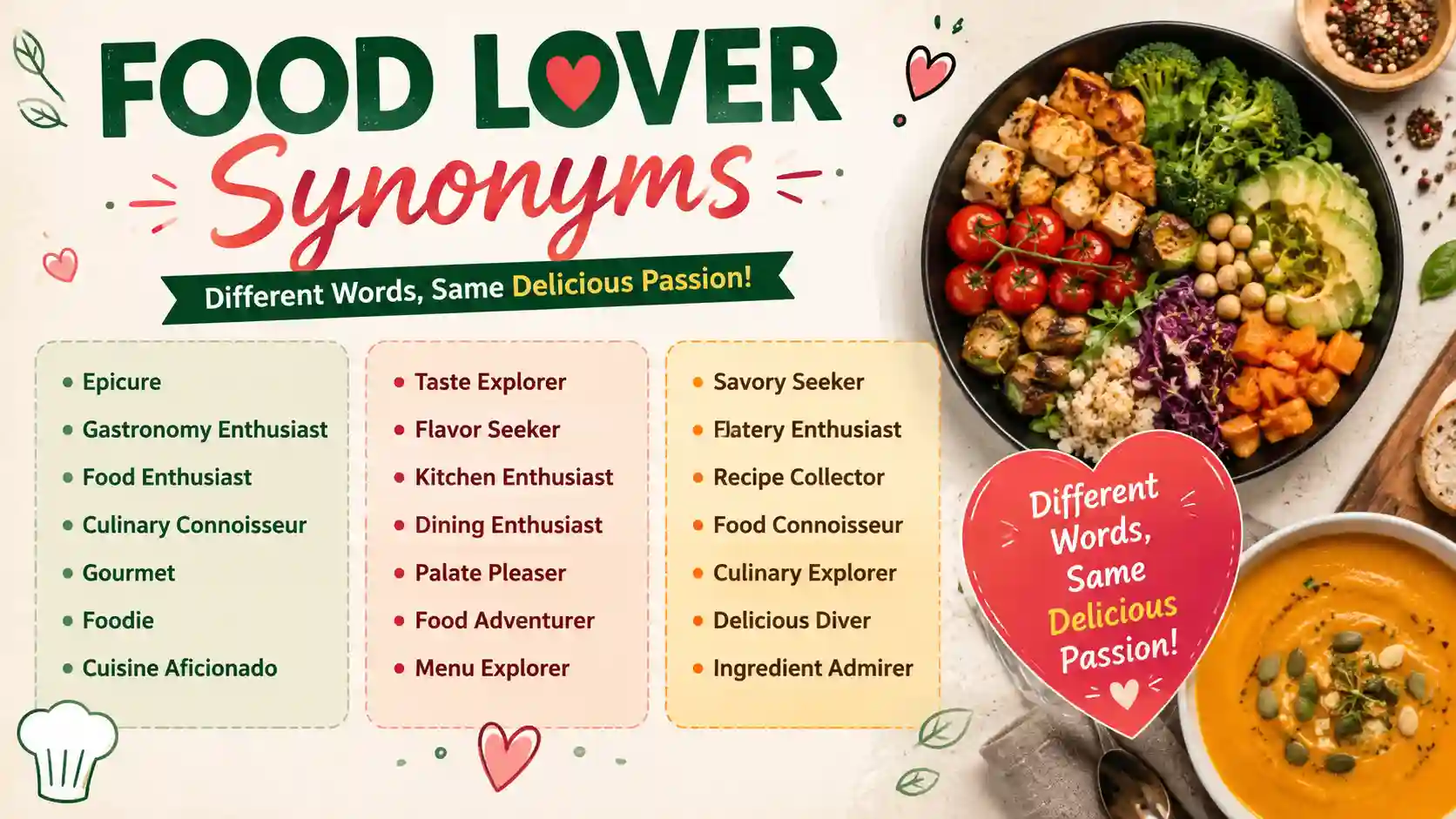
The best food lover synonyms are foodie, gourmet, epicure, gastronome, connoisseur, gourmand, food enthusiast, food aficionado, and chowhound. The best choice depends on your meaning. Foodie is the most natural everyday option, while gourmet, epicure, and gastronome suggest a stronger interest in fine or high-quality food.
Introduction
Have you ever wanted to describe someone who gets excited about trying a new restaurant, discovering a new dish, or talking about their favorite meal? Saying food lover works, but English gives you many more choices.
The most common food lover synonym is foodie. It describes someone who has a strong interest in food, especially eating, cooking, or discovering different foods.
Other words carry different shades of meaning. A gourmet suggests knowledge and appreciation of fine food. An epicure suggests refined enjoyment, while gourmand can suggest eating too much. A gastronome is more formal and is often used for someone with serious knowledge of food.
This guide explains the best food lover synonyms for students, ESL learners, writers, bloggers, teachers, and professionals. You will learn their meanings, tones, collocations, CEFR guidance, and when to use or avoid each word.
Pronunciation
Food lover: /fuːd ˈlʌvər/
Pronounced as: food LUV-er
The phrase food lover is made from the noun food and the noun lover, used together as a noun phrase.
Part of Speech
Food lover is a noun phrase.
- Noun: food lover
- Plural noun: food lovers
- Adjective: food-loving
- Verb: There is no direct verb form.
- Adverb: There is no direct adverb form.
Examples
- She is a food lover who enjoys trying new dishes.
- My brother is a serious food lover.
- They are a food-loving family.
Grammar Usage
Use food lover to describe a person who strongly enjoys food.
Common patterns
- a food lover
- a passionate food lover
- a true food lover
- food lovers around the world
- something for food lovers
Common mistake
Incorrect: He is a food lover.
Correct: He is a food lover.
Because food lover is a singular countable noun phrase, it normally needs an article such as a or the.
Quick Tip: In casual English, foodie is usually shorter and more natural than “food lover.”
Food Lover Synonyms Overview
| Synonym | Strength | Formality |
| Foodie | Strongest | Informal |
| Gourmet | Strongest | Neutral |
| Epicure | Strong | Formal |
| Gastronome | Strong | Formal |
| Connoisseur | Strong | Formal |
| Food enthusiast | Strong | Neutral |
| Food aficionado | Strong | Neutral |
| Food connoisseur | Strong | Formal |
| Culinary enthusiast | Strong | Neutral |
| Gourmand | Related | Formal |
| Food buff | Related | Informal |
| Food fan | Related | Informal |
| Chowhound | Related | Informal |
| Epicurean | Related | Formal/Literary |
| Bon vivant | Related | Literary |
| Gastronomer | Related | Formal |
| Gastronomist | Related | Rare |
| Hedonist | Related | Neutral |
| Sybarite | Related | Literary |
| Glutton | Related | Negative |
Detailed Food Lover Synonyms
1. Foodie
Meaning: A foodie is someone who has a strong interest in food, eating, cooking, or discovering new dishes.
CEFR: B1
Frequency: Very common
Register: Informal, everyday English
Tone: Positive and enthusiastic
Examples:
- Maya is a foodie who searches for new restaurants every weekend.
- This city is perfect for foodies who enjoy international cuisine.
Best Used When: You want the most natural modern word for a person who loves food.
Common Collocations: serious foodie, fellow foodie, foodie culture
When Not to Use: Avoid it in very formal academic writing if a more precise term is available.
Etymology: Foodie comes from food + -ie. Merriam-Webster records its first known use as 1980.
2. Gourmet
Meaning: A gourmet is someone who appreciates and knows a lot about high-quality food and drink.
CEFR: B2
Frequency: Common
Register: Neutral, culinary, formal
Tone: Positive and refined
Examples:
- The gourmet carefully examined the restaurant’s tasting menu.
- She has developed a gourmet appreciation for regional cheeses.
Best Used When: You want to suggest knowledge of fine food.
Common Collocations: gourmet cook, gourmet food, gourmet meal
When Not to Use: Do not use gourmet simply for anyone who enjoys eating. It often suggests quality and knowledge.
Etymology: The word comes from French and has roots connected with an Old French term for a servant, wine taster, or vintner’s assistant.
3. Epicure
Meaning: An epicure is a person who enjoys high-quality food and drink.
CEFR: C1
Frequency: Uncommon
Register: Formal, literary
Tone: Refined and positive
Examples:
- The epicure appreciated every detail of the elegant meal.
- He describes himself as an epicure with a taste for classic French cuisine.
Best Used When: Writing formally about someone with refined tastes.
Common Collocations: true epicure, sophisticated epicure, epicure’s taste
When Not to Use: It can sound too formal for casual conversation.
Etymology: The word comes from Epicurus, the ancient Greek philosopher, and later developed a meaning connected with refined pleasure in food and drink. Cambridge labels it formal.
4. Gastronome
Meaning: A gastronome is someone who enjoys and understands good food, especially unusual or expensive food.
CEFR: C1
Frequency: Uncommon
Register: Formal, culinary
Tone: Sophisticated
Examples:
- The young gastronome traveled widely to study regional cuisine.
- Every dish impressed the experienced gastronome.
Best Used When: You need a formal word for a serious food enthusiast.
Common Collocations: experienced gastronome, discerning gastronome, young gastronome
When Not to Use: It may sound unnatural in casual conversation.
Etymology: Gastronome comes from French and was formed from gastronomie. Merriam-Webster gives 1823 as its first known use.
5. Connoisseur
Meaning: A connoisseur is someone with expert knowledge and good judgment in a particular area, including food and drink.
CEFR: C1
Frequency: Common
Register: Formal, professional
Tone: Expert and positive
Examples:
- As a wine connoisseur, he noticed the subtle flavor immediately.
- She is a connoisseur of traditional Italian cooking.
Best Used When: Knowledge and expert judgment matter more than simple enjoyment.
Common Collocations: food connoisseur, wine connoisseur, culinary connoisseur
When Not to Use: Do not use it for someone who simply likes eating.
6. Food Enthusiast
Meaning: A food enthusiast is someone who is very interested in food.
CEFR: B1
Frequency: Common
Register: Neutral
Tone: Positive
Examples:
- As a food enthusiast, he enjoys learning about local ingredients.
- The festival attracted thousands of food enthusiasts.
Best Used When: You want a clear and professional alternative to food lovers.
Common Collocations: passionate food enthusiast, local food enthusiast, food enthusiast community
When Not to Use: It is less compact than foodie.
7. Food Aficionado
Meaning: A food aficionado is someone who has a strong interest in and knowledge of food.
CEFR: C1
Frequency: Uncommon
Register: Neutral to formal
Tone: Knowledgeable and enthusiastic
Examples:
- The food aficionado knew which dish the restaurant was famous for.
- Food aficionados often travel to discover authentic regional dishes.
Best Used When: Writing polished website, magazine, or marketing copy.
Common Collocations: food aficionado, culinary aficionado, serious aficionado
When Not to Use: Avoid it if your audience needs very simple English.
8. Food Connoisseur
Meaning: A food connoisseur is someone who has expert knowledge of food and can judge its quality.
CEFR: C1
Frequency: Uncommon
Register: Formal, professional
Tone: Expert
Examples:
- The chef welcomed feedback from the experienced food connoisseur.
- A true food connoisseur can often identify subtle differences in flavor.
Best Used When: You want to emphasize expertise.
Common Collocations: experienced food connoisseur, culinary connoisseur, knowledgeable connoisseur
When Not to Use: It is too strong if the person simply enjoys trying restaurants.
9. Culinary Enthusiast
Meaning: A culinary enthusiast is someone who is strongly interested in food or cooking.
CEFR: B2
Frequency: Common
Register: Neutral, professional
Tone: Positive
Examples:
- Every culinary enthusiast enjoyed the cooking demonstration.
- The course is designed for young culinary enthusiasts.
Best Used When: Your focus includes cooking as well as eating.
Common Collocations: culinary enthusiast, culinary skills, culinary experience
When Not to Use: It may sound formal in a casual conversation with friends.
10. Gourmand
Meaning: A gourmand is someone who enjoys eating and drinking, often in large amounts.
CEFR: C1
Frequency: Uncommon
Register: Formal
Tone: Sometimes humorous or negative
Examples:
- He is a gourmand who never misses a large family feast.
- The restaurant’s rich menu attracted serious gourmands.
Best Used When: You want to suggest strong enjoyment of eating, sometimes with excess.
Common Collocations: devoted gourmand, famous gourmand, enthusiastic gourmand
When Not to Use: Do not use it as a completely positive synonym for foodie. Collins notes that it can imply excess.
11. Food Buff
Meaning: A food buff is someone who knows a lot about or has a strong interest in food.
CEFR: B2
Frequency: Uncommon
Register: Informal
Tone: Friendly
Examples:
- My uncle is a food buff who knows every restaurant in town.
- The quiz was difficult even for a food buff.
Best Used When: You want a casual and friendly expression.
Common Collocations: food buff, movie buff, sports buff
When Not to Use: Avoid it in highly formal writing.
12. Food Fan
Meaning: A food fan is someone who enjoys or strongly likes food.
CEFR: A2–B1
Frequency: Common
Register: Informal
Tone: Simple and positive
Examples:
- Every food fan should try the market’s fresh dumplings.
- She is a huge food fan.
Best Used When: You want very simple everyday English.
Common Collocations: huge food fan, big food fan, fellow food fan
When Not to Use: It does not suggest expert knowledge.
13. Chowhound
Meaning: A chowhound is an informal word for someone who loves eating and enjoys food.
CEFR: C1
Frequency: Uncommon
Register: Informal
Tone: Playful
Examples:
- My brother is a chowhound who always asks about dessert.
- The food festival was packed with hungry chowhounds.
Best Used When: You want humorous or playful American English.
When Not to Use: Avoid it in formal essays and professional reports.
14. Epicurean
Meaning: Epicurean can describe someone who enjoys fine food and other physical pleasures.
CEFR: C1
Frequency: Uncommon
Register: Formal, literary
Tone: Refined
Examples:
- The hotel is known for its epicurean dining experiences.
- He enjoys an epicurean lifestyle centered on good food and travel.
Best Used When: Writing about refined pleasure, especially food and lifestyle.
When Not to Use: It can refer to pleasure more broadly, so it is not always a direct replacement for food lovers.
15. Bon Vivant
Meaning: A bon vivant is someone who enjoys good food, wine, restaurants, parties, and social pleasures.
CEFR: C1
Frequency: Uncommon
Register: Literary, sophisticated
Tone: Stylish and positive
Examples:
- The famous bon vivant knew the best restaurants in Paris.
- His friends considered him a true bon vivant.
Best Used When: Food is part of a wider love of social and luxurious pleasures.
Common Collocations: social bon vivant, famous bon vivant, true bon vivant
When Not to Use: It is not a direct synonym for someone who only loves food. Cambridge defines it more broadly around food, wine, restaurants, and parties.
16. Gastronomer
Meaning: A gastronomer is a person interested in gastronomy, food, and good eating.
CEFR: C2
Frequency: Rare
Register: Formal
Tone: Academic or literary
Examples:
- The gastronomer studied the history of regional cooking.
- The conference brought together chefs and gastronomers.
Best Used When: Discussing food from an academic or specialist perspective.
When Not to Use: Do not choose it for ordinary conversation.
17. Gastronomist
Meaning: A gastronomist is a person who studies or has specialist knowledge of gastronomy.
CEFR: C2
Frequency: Rare
Register: Academic, formal
Tone: Specialist
Examples:
- The gastronomist wrote about the cultural history of food.
- Several gastronomists attended the culinary research conference.
Best Used When: You need specialist vocabulary connected with gastronomy.
When Not to Use: It is unnecessarily complex when a foodie or food enthusiast will work.
18. Hedonist
Meaning: A hedonist is someone who seeks pleasure, which can include pleasure from food and drink.
CEFR: C1
Frequency: Common
Register: Neutral to formal
Tone: Sometimes negative
Examples:
- He describes himself as a hedonist who enjoys great meals and travel.
- The novel presents her as a hedonist who seeks pleasure everywhere.
Best Used When: Food is one part of a broader search for pleasure.
When Not to Use: It is too broad to be an exact synonym for food lover.
19. Sybarite
Meaning: A sybarite is a person who enjoys luxury, comfort, and physical pleasure.
CEFR: C2
Frequency: Rare
Register: Literary
Tone: Often critical or sophisticated
Examples:
- The wealthy sybarite demanded the finest food and accommodation.
- The novel portrays him as a sybarite surrounded by luxury.
Best Used When: Describing luxurious living rather than simple enjoyment of food.
When Not to Use: It is not a natural everyday replacement for food lovers.
20. Glutton
Meaning: A glutton is someone who eats too much or greedily.
CEFR: B2
Frequency: Common
Register: Neutral
Tone: Negative or humorous
Examples:
- I felt like a glutton after eating three slices of cake.
- He joked that he was a glutton whenever dessert appeared.
Best Used When: You want to describe excessive eating.
When Not to Use: Never use glutton when you simply want to give someone a positive compliment.
Strongest, Strong, and Related Synonyms
Strongest Synonyms
These are the best choices when you genuinely mean someone who loves food:
- Foodie: best everyday choice
- Gourmet: suggests knowledge of fine food
- Epicure: refined enjoyment
- Gastronome: formal food specialist
- Food enthusiast: clear and neutral
Strong Synonyms
These work well but add extra meaning:
- Connoisseur: expert judgment
- Food aficionado: strong interest and knowledge
- Food connoisseur: expert knowledge of food
- Culinary enthusiast: food and cooking
- Gourmand: strong enjoyment, sometimes excess
Related Words
These are connected to the idea but are not exact synonyms:
- Food buff
- Food fan
- Chowhound
- Epicurean
- Bon vivant
- Gastronomer
- Gastronomist
- Hedonist
- Sybarite
- Glutton
Choose the Right Synonym
| If you mean… | Best word | Why |
| Someone who simply loves food | Foodie | Natural and common |
| Someone who appreciates fine food | Gourmet | Suggests quality and knowledge |
| Someone with refined taste | Epicure | Formal and sophisticated |
| A serious food expert | Connoisseur | Emphasizes judgment |
| A formal food enthusiast | Gastronome | Specialist feel |
| Someone interested in food and cooking | Food enthusiast | Clear and neutral |
| Someone who eats excessively | Gourmand | Can suggest excess |
| Someone who loves luxury too | Bon vivant | Broader lifestyle meaning |
| Someone who eats too much | Glutton | Clearly negative |
Remember: There is no single perfect synonym for every use of food lover. Choose the word that matches the person’s attitude, knowledge, and context.
Commonly Confused Words
| Word | Difference | Example |
| Foodie | Loves and explores food | She is a foodie. |
| Gourmet | Appreciates high-quality food | He is a gourmet. |
| Gourmand | Enjoys eating, sometimes excessively | He is a serious gourmand. |
| Connoisseur | Has expert knowledge and judgment | She is a wine connoisseur. |
| Glutton | Eats excessively | He felt like a glutton. |
Common Mistakes
Common Mistake Box
Mistake: Calling every food lover a gourmet.
Correction: Use foodie for general enthusiasm.
Explanation: Gourmet often suggests knowledge and appreciation of fine food.
Mistake: Using glutton as a compliment.
Correction: Use foodie, food fan, or food enthusiast.
Explanation: Glutton normally has a negative meaning.
Mistake: Using connoisseur for anyone who likes pizza.
Correction: Use connoisseur when the person has knowledge and judgment.
Explanation: A connoisseur is more than an enthusiastic consumer.
Mistake: Using bon vivant as an exact synonym.
Correction: Use it when food is part of a wider love of social pleasure.
Explanation: A bon vivant may enjoy restaurants, wine, parties, and luxury as well as food.
American vs British English
The most useful everyday word is foodie in both American and British English.
Cambridge gives /ˈfuː.di/ in British English and the same basic pronunciation in American English. Collins also recognizes foody as a variant, particularly in British English.
Usage differences
- Foodie: common in both varieties
- Gourmet: common in both, with slightly different pronunciation patterns
- Bon vivant: used in both but relatively sophisticated
- Chowhound: strongly informal and particularly associated with American English
- Foody: a less common spelling variant
For general ESL writing, foodie is the safest natural choice.
Word Origin and Etymology
The phrase food lover is transparent English: food describes what is loved, while lover describes a person who loves it.
The modern word foodie is much newer. Merriam-Webster records its first known use as 1980, while Dictionary.com traces it to food + -ie.
Several formal alternatives come from French:
- Gourmet came into English from French.
- Gourmand came through Middle English and Old French.
- Gastronome came from French gastronomie.
- Epicure is connected historically with the name Epicurus.
This explains why many refined food words can sound more formal than the everyday foodie.
Writing Tips
In Essays
Use food enthusiast, gourmet, or connoisseur when the context supports their meaning.
Example:
A growing number of food enthusiasts are interested in regional cuisine.
In Emails
Keep the language simple.
Example:
As a fellow foodie, I think you will enjoy this restaurant.
In Blog Posts
Foodie works especially well because it is friendly and familiar.
Example:
Here are five weekend destinations every foodie should visit.
In Professional Writing
Use more precise terms.
Example:
The event attracted culinary enthusiasts and food professionals from across the region.
In Social Media
Short, playful terms work best.
- Foodie
- Food fan
- Chowhound
- Food lover
Related Vocabulary
Related expressions
- food lover
- food lover at heart
- passionate foodie
- food enthusiast
- food obsessed
- food fan
- lover of good food
- culinary enthusiast
- fine-food lover
- restaurant enthusiast
Related vocabulary
- cuisine
- culinary
- gastronomy
- dining
- flavor
- taste
- recipe
- chef
- restaurant
- delicacy
- cuisine lover
- fine dining
Antonyms and contrasting ideas
There is no perfect one-word antonym for food lover, but useful contrasts include:
- picky eater
- indifferent eater
- uninterested in food
- plain eater
- non-foodie
These describe people who may show little interest in exploring or appreciating food.
Real-World Collocations
Native speakers commonly combine these words with phrases such as:
- serious foodie
- passionate foodie
- food lover
- food enthusiast
- food connoisseur
- gourmet cooking
- gourmet food
- fine dining
- culinary enthusiast
- experienced gastronome
- wine connoisseur
- food aficionado
Collocations matter because a word can be grammatically correct but still sound unnatural in a particular combination. For example, serious foodie sounds natural, while serious food lover is understandable but less compact.
Mini Practice Exercises
Fill in the Blanks
Choose the best word: foodie, gourmet, gourmand, connoisseur
- Sarah loves trying new restaurants. She is a real ______.
- The wine ______ identified the rare bottle immediately.
- The restaurant attracts ______ who appreciate fine cuisine.
- He ate three huge desserts and joked that he was a ______.
Sentence Rewriting
Replace food lover with a more precise word.
- She is a food lover who enjoys expensive restaurants.
- He is a food lover who knows a great deal about wine.
- My friend is a food lover who loves trying new dishes.
Possible answers
- She is a gourmet who enjoys expensive restaurants.
- He is a connoisseur who knows a great deal about wine.
- My friend is a foodie who loves trying new dishes.
Matching Exercise
Match the word to its best meaning.
A. Foodie
B. Gourmet
C. Glutton
D. Epicure
- Eats excessively
- Informal food enthusiast
- Enjoys high-quality food
- Refined food lover
Answers: A-2, B-3, C-1, D-4
FAQ: Food Lover Synonyms
What is the best synonym for food lover?
The best general synonym for food lover is foodie. It is natural, friendly, and widely understood. Use gourmet when you want to suggest knowledge of fine food, and epicure or gastronome when you want a more formal or sophisticated expression.
What do you call someone who loves food?
You can call such a person a foodie, food enthusiast, food lover, gourmet, or food aficionado. The best choice depends on context. Foodie is the easiest everyday option, while gourmet suggests greater interest in high-quality food.
Is foodie a synonym for food lover?
Yes. Foodie is one of the closest and most natural synonyms for food lover. Cambridge defines a foodie as someone who loves food and is very interested in different types of food. It can also include an interest in cooking.
What is a fancy word for food lover?
Epicure, gastronome, and food connoisseur are good sophisticated alternatives. Epicure describes someone who enjoys high-quality food and drink, while gastronome has a more formal specialist feel.
Is gourmet the same as foodie?
Not exactly. A foodie is generally enthusiastic about food, while a gourmet often has knowledge of and appreciation for fine food. Therefore, many gourmets are foodies, but not every foodie is a gourmet.
What is the difference between gourmand and gourmet?
A gourmet suggests appreciation and knowledge of high-quality food. A gourmand focuses more on enthusiastic eating and can suggest excess. Because of this difference, gourmand is not always a positive replacement for food lover.
What is a professional word for food lover?
For professional writing, food enthusiast, culinary enthusiast, food connoisseur, or gastronome can work well. Choose connoisseur when expertise matters and enthusiast when you simply want to express strong interest.
What is the opposite of a foodie?
There is no exact standard antonym for foodie. Depending on the meaning, you could say someone uninterested in food, a picky eater, or someone who is indifferent to food. These expressions describe different ideas, so context matters.
Vocabulary Quiz
1. Which word is the most common informal synonym for food lover?
A. Sybarite
B. Foodie
C. Gastronomist
D. Epicure
2. Which word can suggest excessive eating?
A. Gourmet
B. Connoisseur
C. Gourmand
D. Food enthusiast
3. Which word emphasizes expert knowledge?
A. Food fan
B. Connoisseur
C. Foodie
D. Chowhound
4. Which word is more formal and sophisticated?
A. Chowhound
B. Food fan
C. Epicure
D. Foodie
5. Which word describes someone who seeks pleasure more broadly than just food?
A. Hedonist
B. Food buff
C. Foodie
D. Gourmet
Answer Key
- B. Foodie
- C. Gourmand
- B. Connoisseur
- C. Epicure
- A. Hedonist
Conclusion
Learning food lover synonyms helps you choose words that express the exact meaning you want. Foodie is the best everyday option, while gourmet, epicure, gastronome, and connoisseur offer more specific meanings. Words such as gourmand and glutton need care because they can suggest excessive eating. Try using these words in your essays, emails, blog posts, conversations, and social media writing. The more you practice them in real sentences, the easier it becomes to choose the right word naturally.
References
- Merriam-Webster: Foodie definition, word history, and first known use.
- Cambridge Dictionary: Foodie, epicure, and bon vivant definitions and usage.
- Collins Dictionary: Gourmet, gourmand, gastronome, and foodie definitions, pronunciation, and word origins.
- Dictionary.com: Foodie definition and etymology.
- Cambridge English Thesaurus: Related synonyms for foodie.

Synonorm is a trusted English vocabulary resource created to help readers find the right words and understand the differences between similar terms. We provide clear explanations of synonyms, meanings, examples, usage, and alternatives. Our content makes vocabulary easier to learn and apply in everyday, academic, and professional English. Synonorm is designed for students, writers, ESL learners, professionals, and anyone who wants to improve their English vocabulary and communicate more clearly.